
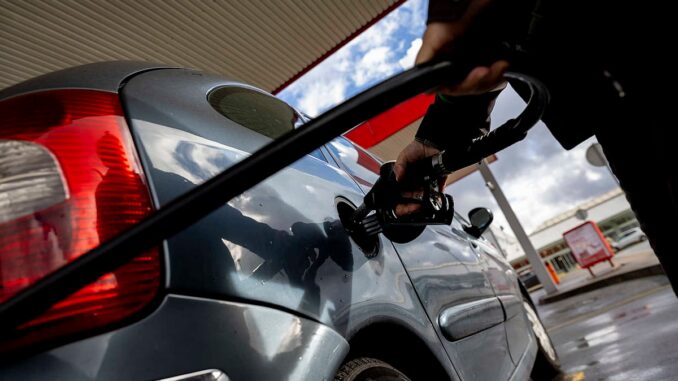
That fuel prices will increase, no one has any doubt. The scope of this increase, which is expected to be high, will depend on the duration of the fierce conflict in the Middle East, the intensity and the reaction of Iran and the countries involved. But there will be no supply problems in the short or medium term, because not only does Portugal have reserves for 93 days, but most of the oil and gas we consume does not originate in that region. Analysts, however, anticipate greater price increases for natural gas in the medium term, if the conflict takes a long time to resolve.
If the week ended this Tuesday, March 3, it would be possible to anticipate a rise of around 13 cents in fuel prices the following week, as prices reflect the previous week’s prices. The estimate was put forward this Tuesday by Mafalda Trigo, vice-president of the National Association of Fuel Dealers (ANAREC). “If it were today, forecasts are for increases of 13 cents per liter”said the person responsible, to Radio Renascença. But Mafalda Trigo stressed that “it’s only Tuesday and the market started on Monday. We have to wait until Friday, when the market closes.” Be that as it may, “will always be a considerable value”, said the head of ANAREC.
António Comprido, president of the Association of Portuguese Fuel and Lubricant Companies (EPCOL), is not so pessimistic about the effects of the military conflict on a brutal increase in oil prices, the same not happening in the case of natural gas.
“If it is possible for a barrel of oil to rise above 100 dollars, it is, but it is unlikely”, considered Antonio Comprido. And the first reason is the fact that nowadays there is a lot of liquidity in the markets, even a surplus in relation to consumption. On the other hand, “because the world is different since the last major oil shock, the EU’s energy system is more resilient, has alternative sources and the fact that the EU managed to circumvent imports of Russian oil is an example of this,” he said.
But If the current blockage in the Strait of Hormuz is prolonged, the effects will be more significantbut mainly to Asian countries such as China, South Korea and Japan.
As for natural gas, whose price has already increased by 50% in recent days, analysts are more pessimistic, with Central Europe being most affected, as it imports gas from that region that circulates in the Strait of Hormuz. And the most immediate problem is the difficulty of circulation, as insurance premiums have increased to such an extent that they have made freight costs unviable – they have increased by 100%, ending up being reflected not only in energy products but in a series of other consumer goods.
Portugal and Spain have a more comfortable situation, as they buy essentially from North Africa, more specifically Algeria, which supplies the peninsula via gas pipeline.
In the case of national oil companies, Galp does not anticipate special restrictions, not only because the country has energy reserves for 93 days, but also because its production is located in Brazil, which allows it to travel via the Cape route (South Africa), a source at the oil company told DN. And in terms of economic impact for the company, it should be neutral, since being an oil company and refiner, it pays more, but will also sell more expensively, benefiting from rising prices in international markets.
Leave a Reply