
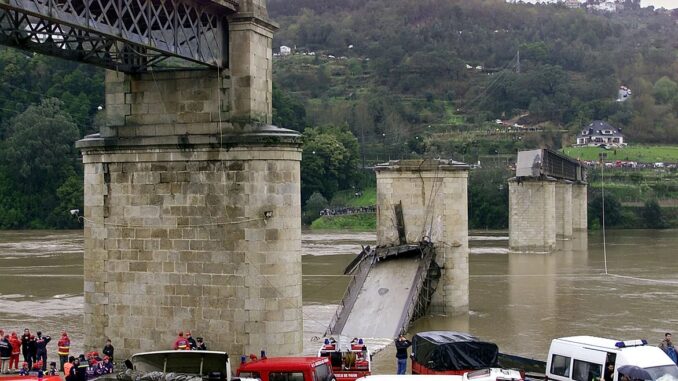
Investigations carried out after the disaster pointed to several causes that contributed to the collapse. The fourth pillar of the bridge will have given way due to the erosion of the foundations, caused by the force of the currents and the wear accumulated over decades. The intensive extraction of sand from the Douro riverbed, carried out over many years, was identified as one of the factors that weakened the stability of the structureby removing sediments that helped support the pillars.
It also became clear that the bridge showed signs of degradation and that there were warnings about the need to reinforce or replace the crossing. In the years before the disaster, warnings had been made by mayors and local authorities regarding the state of infrastructure and the urgency of building a new bridge.
The human dimension of the tragedy generated a strong national commotion. The Government decreed two days of national mourning and thousands of people participated in the funeral ceremonies in Castelo de Paiva. Less than 24 hours after the collapse, the Minister of Social Equipment, Jorge Coelho, resigned, assuming political responsibility for what happened. The gesture marked one of the most symbolic moments of the institutional reaction to the disaster.
Technical investigations and legal proceedings followed to determine possible responsibilities in the maintenance of the bridge and the management of sand mining in the river. Despite the long process, the courts ended up not producing definitive criminal convictions. Even so, The tragedy triggered a profound debate about the inspection of public infrastructure, the safety of bridges and the regulation of extractive activity in Portuguese rivers.
For months, the collapse of the bridge left the populations on both banks with severely restricted mobility. The crossing was now ensured by boats and temporary connections until the construction of a new road bridge in the area, opened in 2002.
A memorial to the victims was erected at the place where the disaster occurred. The sculpture, known as the “Angel of Portugal”, stands next to the river and bears the names of the 59 people who lost their lives that night. Every year, on March 4th, family members, mayors and residents of the region gather to mark the date and remember the victims. In silence, 59 flowers are thrown into the Douro — one for each life lost.
A quarter of a century later, the Entre-os-Rios tragedy remains present in the country’s collective memory and, above all, in the lives of the families who remained. For many, the night the bridge fell didn’t really end. It remains like an open wound in Portugal’s recent history.
Leave a Reply