
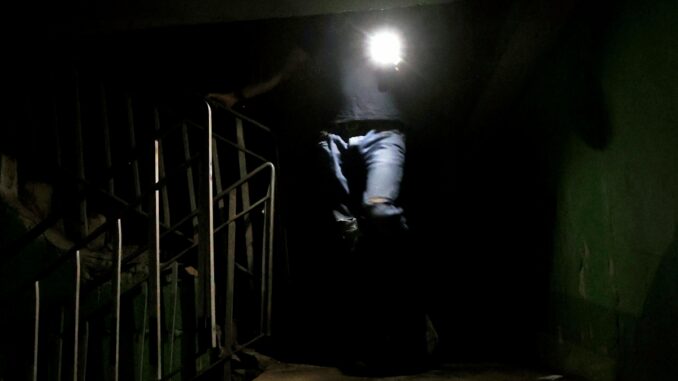

HAVANA (EFE).— “Is anyone stuck on the lift?” he shouts, with his cell phone lamp in his hand, Heidi Martinez, the administrator of a 18-story building in the Alamar neighborhood, on the outskirts of Havana.
Heidi, 53, is neither a technician nor a mechanic. But she has become an expert at manually opening the elevator in this apartment block. He does it several times a week when a neighbor is trapped by daily power outages.
“We have already taken blackout culture“, he tells EFE at the entrance of the building.
The outages due to a deficit in power generation on the island have been chronic for years in this peripheral neighborhood, but in recent weeks they have worsened to the extent that it is difficult to bear, with between 15 and 20 hours a day throughout the country, due to Washington’s oil siege on Cuba.
In fact, this Tuesday the island suffered the most extensive blackout on record, according to official data. At the time of maximum demand, in the evening, more than 64% of the country was simultaneously without electrical power.
Cuba’s daily “take and put”
Here, in Alamar, this nightmare comes with an extra that has become a headache for its around 100,000 residents. they call it “take off and put on”, explains Heidi Martínez: rrepeated power outages without any pattern that last for hours, every day.
“It could be 20 minutes, it could be half an hour, it could be an hour… Nobody adapts to that. That’s like: ‘now, what remedy?'” says Erleny, 49, while repairing a tire tube in a makeshift workshop in front of the building’s garages.
This flickering is already part of the daily lives of the inhabitants of Alamar. According to Gladys Berriel, a 74-year-old retired Special Education teacherthe problem began in 2023 and “it stayed that way.”
The frustration is such, he adds, that not a few residents would change the “removal” for the prolonged blackouts in other regions of the same island.
“If we at least had a schedule (of the blackouts), because we know perfectly well the situation with the fuel issue, you can adjust,” agrees Heidi, the building administrator.
The situation goes beyond the inconvenience and scare of being trapped in the elevator. The “removal” mercilessly ruins appliances in a country where, as if that were not enough, the shortage of products and strong inflation work against it.
According to Gladys Berriel, fixing her refrigerator cost her more than her pension.
“We had to pay 5,000 pesos (11 dollars, at the official exchange rate) for the arrangement, and I am retired. What they pay me in retirement is 3,156 pesos (6.8 dollars) and I worked 37 years in education,” she laments.
Leave a Reply