
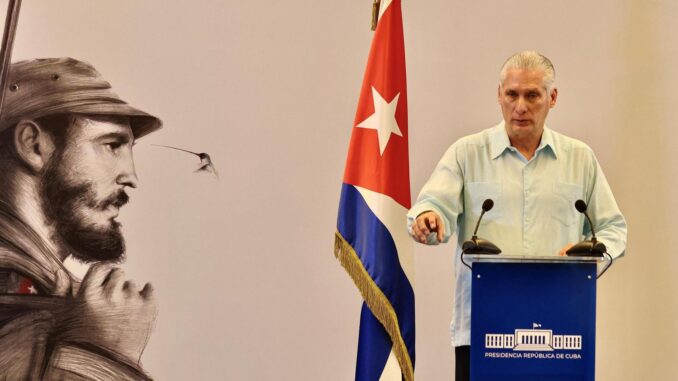
Donald Trump already has his next objective in mind when the outcome of the war against Iran is still uncertain. This Monday, the US president mentioned the possibility of his Administration taking control of Cuba, the communist stronghold in the Caribbean in a more than precarious situation due to the strict economic and oil blockade.
The president boasted during a press conference at the White House that he will have the “honor of taking Cuba.” “Take Cuba in some way, whether liberate it or take it. I think I can do anything I want with it, if you want to know the truth,” he assured, confirming the contacts opened in recent weeks with the Government of Havana and emphasizing that “they have nothing.”
Trump’s words were recorded on the same day that the island experienced a massive blackout that affected ten million people. The deep energy crisis that Cuba has suffered since mid-2024 has worsened in the last three months with the oil blockade imposed by the US. Faced with this critical situation, some internal voices of the communist regime are considering the possibility of opening up to foreign investments.
But the truth is that Trump does not give a single thread and his statements suggest a plan to completely overturn Cuba, as he already did in Venezuela last January with the audacious special operation to capture the autocrat Nicolás Maduro.
In fact, according to The New York Times, the US Administration has already expressed to the Cuban authorities an essential condition for diplomatic negotiations to be fruitful: President Miguel Díaz-Canel must abandon power and step aside.
According to two officials cited by the American newspaper, representatives of the Trump Administration have indicated to Cuban negotiators that the president should resign, although they have left the subsequent steps in the hands of local authorities. The proposal would involve removing Díaz-Canel, but not necessarily modifying the structure of the current political system, which has been in power for 65 years.
The cited sources added that, for now, Washington is not pressing for measures to be taken against members of Fidel Castro’s family, who continue to be influential figures within the country’s power apparatus. What is sought is that some senior hardline officials who have remained in their positions since the time of Fidel Castro also be removed from decision-making centers.
Some US officials believe that the departure of the head of state could facilitate structural economic changes that, in their opinion, Díaz-Canel would be unlikely to support. Another key demand is the release of political prisoners on the island.
For his part, Díaz-Canel, who assumed the presidency of Cuba in 2018, replacing Raúl Castro, confirmed last week in a press conference that there are contacts with the US to “seek solutions through dialogue to the differences between both governments”, something that Trump had already advanced, but that the island had denied.
Leave a Reply