
The keys
nuevo
Generated with AI
nuevo
Generated with AI
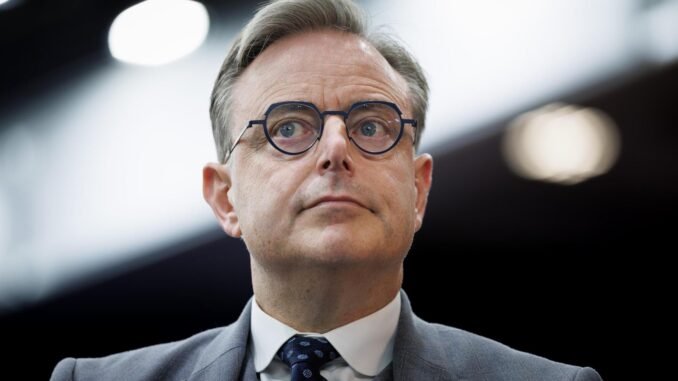
The Prime Minister of Belgium, Bart De Weverlast Saturday asked the European Union to apply “common sense” to mitigate the rise in gas and oil prices caused by the war in Iran and the closure of the strategic Strait of Hormuz. That “common sense” that the Flemish nationalist leader used involves “normalizing” relations with the Russia of Vladimir Putin to obtain “cheap energy”.
“Privately, European leaders agree with me, but no one dares to say it out loud. We must end the conflict in the interests of Europe, without being naive about Putin,” confessed De Wever, portrayed by Politico as the Kremlin’s “most valuable asset” for its refusal to use frozen Russian assets to finance a loan to Ukraine valued at €140 billion.
“Since we are not able to pressure Putin by sending weapons to Ukraine, and we cannot suffocate its economy without the support of the United States, there is only one method left: reach an agreement,” stressed the premier Belgian in an interview with the newspaper Litter.
His statements set fire to his own government coalition, agitated Belgian politics and angered most of his European partners. The Energy Commissioner, Dan Jorgensenwas responsible for reminding him that the Twenty-Seven had made the decision to stop importing Russian energy. “Before Christmas we turned it into law,” said the Danish social democrat. “It would be a mistake to repeat what we did in the past. In the future we will not import a single molecule from Russia.”
“The prime minister can say what he wants in his personal capacity, but on behalf of the Government he cannot say that now, suddenly, we want to go and beg Putin for cheap energy. That has not been agreed upon in the Government. Everyone knows that Putin is unreliable, that you cannot make deals with that man,” he declared this Monday. Conner Rousseauleader of the Flemish socialist party Vooruit, member of the Cabinet.
“Buying more gas from Putin again will only give Russia more money to continue its war in Ukraine. Why would it ever stop its war or sit at the table to negotiate? All you do is fuel Russian aggression even more,” reads, for its part, the statement from the Christian Democratic and Flemish party (CD&V), another coalition partner.
The Belgian Minister of Foreign Affairs, Maxime Prévotof the center-left French-speaking party Les Engagés, partially bought the prime minister’s argument: “Should we engage in dialogue with Russia? Yes. That’s what diplomacy is about: talking, even with those who don’t share your views.”
But he made it clear that “dialogue” was not the same as “normalization,” and that that was “a crucial distinction.” “Today, Russia rejects the European presence at the table. It maintains maximalist demands,” recalled Prévot. “As long as that is the case, talk of normalization sends a signal of weakness and undermines the European unity we need now more than ever.”
The head of Belgian diplomacy also clarified this Monday during the meeting of EU foreign ministers in Brussels that his country’s support for Ukraine remained unchanged: “The prime minister has not said otherwise. Nor has he asked for sanctions relief. Before an eventual peace agreement, that is not on the table.”
De Wever himself picked up the cable on Monday night, and chose to victimize himself. “It has been given a dimension as if I now wanted to get along with Russia,” lamented the prime minister during an event organized by the Belgian Business Federation. “That’s not the case at all.”
Leave a Reply