
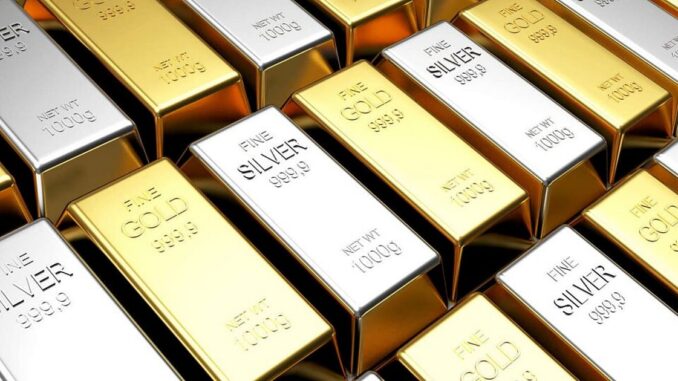
The Portuguese Assay Office certified 4.6 million pieces in 2025, 2.5% more than in the previous year, despite the activity being affected by the rise in gold and silver prices, said general director, Francisco Bastos.
According to information provided to the Lusa agency by the person responsible, last year, around 1.3 tons of gold articles and 9.9 tons of silver passed through Assay Office, representing an increase compared to 2024 of 18.2% and 11.5%, respectively.
Despite the positive evolution, the activity has not yet returned to the values of 2023, the year in which Assay Office marked 4.9 million pieces, corresponding to 1.6 tons of articles in gold and 10.2 tons in silver.
Since the beginning of the year, gold has appreciated by around 20% in international markets, with an ounce (around 31 grams) exchanging values close to 5,200 dollars (around 4,466 euros).
In the last three years, the price of the yellow metal has appreciated by around 150% and silver by almost 200%.
“The rise in metals has had a major impact on the industry, with an impact on assay activity”, noted Francisco Bastos.
At the end of January, when the price of gold suddenly accelerated and in one session surpassed 5,500 dollars per ounce, the impact was significant.
“We felt a drop of 50% in January and around 40% in February”, said the general director.
Contrastaria, a service integrated into the Imprensa Nacional Casa da Moeda, officially certifies articles in precious metals, guaranteeing the type and quantity of precious metal in each piece sold in Portugal.
The hallmark consists of a symbol for each type of metal: gold is represented by the ram’s head, silver by the rabbit’s head, platinum by the hummingbird’s head and palladium by the lynx’s head.
The responsibility mark identifies the producer or person responsible for introducing the item to the market, through an exclusive design and a letter from the name or company name of the operator.
The Portuguese Jewelry and Watchmaking Association (AORP), which brings together industrialists and retailers, also views the rise in prices in recent months “with great apprehension”, according to the general secretary, João Rothes.
The person responsible cites “some difficulty in determining the value of pieces sold in stores”, as the price can vary according to fluctuations in metals in international markets.
Despite the spike in the price of gold and silver at the end of last year, members did not feel a drop in sales last Christmas, as gold is seen as “an excellent investment and something that does not lose value”, said the same person in charge.
However, traders and industrialists are not investing much in stocks and work with “lower margins”.
“Acquiring a kilo of gold currently costs around 150 thousand euros. It is a very high value for some companies”, explained João Rothes.
At the end of the first quarter, AORP sends an assessment of the challenges that rising prices represent for the sector, at a time when the war in the Middle East has also had an impact on prices, although still moderately.
“We have met internally, spoken to some city halls and distributed a questionnaire to members to make a diagnosis and take measures for the future”, added the general secretary of AORP.
The Portuguese Association of the Goldsmith Industry (APIO) has also expressed concern about the price of metals in the universe of industrial micro-enterprises that, on average, employ two people – the artisans who work with gold and silver and produce the pieces to sell at retail.
According to the secretary general, José Carlos Brito, industrial activity would have registered a decrease in 2025, the year in which there was a drop in the consumption of gold and silver.
“We are feeling, with great concern, that the business is very stopped”, said the same person in charge.
Leave a Reply