
It is not uncommon for women to be described as emotional, hysterical, sensitive and easily impressionable – all characteristics that are considered negative and prevent them from achieving success.
The same women who manage to go through unspeakable physical pain, such as childbirth, through hormonal changes that are often almost incapacitating without ever failing to do what they have to do, are seen as weak if they cry in public while occupying leadership positions – men will be labeled as sensitive and human.
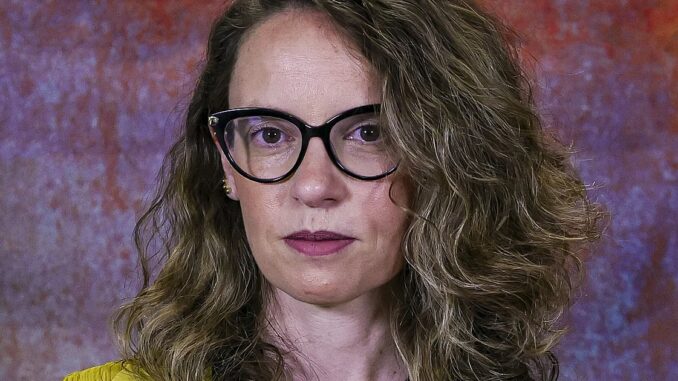
This reflection (as old as the world) came to my mind, again, when last Sunday Ana Abrunhosa summed up the image people have of her: “I went from a crying minister to a ‘tough’ mayor.” She was referring to the episode in which she responded emotionally to a deputy from the Liberal Initiative, during a Commission of Inquiry in which she was heard, when she was a minister in the Government of António Costa, and to the recent comments on her performance as president of the Chamber of Coimbra, when she managed with a firm hand the operations to prevent and respond to bad weather.
Interestingly, Ana Abrunhosa is exactly the same person. Because – amazingly – it is really possible for a person to be “crying” and to be “uptight”. In fact, being both is a sign that you have the right emotional intelligence to deal with the challenges of the world.
This certainty came back to me when, early yesterday afternoon, I read the (again) uncontrolled publications of the American president: in his usual style, Donald Trump threatened countries that “played games” with the USA with reciprocal tariffs of 15%, with which he will try to circumvent the Supreme Court’s veto on the imposition of taxes.
So far, I’ve seen few commentators label Trump as hysterical, sensitive, or emotional (and he probably isn’t suffering from hormonal changes either). Even though maybe they could, just looking at how they react whenever things don’t go as expected: like a 4-year-old child who has had his toy taken away and doesn’t know how to deal with frustration yet.
Jacinda Arden became a mother during her term as Prime Minister of New Zealand, and during a pandemic that brought the world to a standstill – New Zealand was one of the countries that most quickly mitigated the effects of Covid-19; Sanna Marin, the youngest Finnish Prime Minister in history, led the country’s accession to NATO, in a profound change in Finland’s defense policy after the invasion of Ukraine by Russian forces; Angela Merkel, the first woman to lead Germany, (successfully) led the country through the 2008 European financial crisis; Ellen Johnson Sirleaf was the first woman to be elected president of an African state (Liberia) and guaranteed the reconstruction of the country after the civil wars, having secured a Nobel Peace Prize.
Currently, Ursula von der Leyen, president of the European Commission, has shown how the absence of testosterone can be an advantage in a world in which egos tend to fill the room, and obscure vision when seeking to build a better world. While still being sensitive and empathetic, Von der Leyen has also shown herself to be firm, even when men disregard her, not greeting her or stealing her chair.
Emotional intelligence is undervalued because women seem to have it more developed than men, and the world doesn’t appreciate that. But, contrary to what people think, it is precisely those who have it that will be able to take the world to a better place than the one it is in now. Because, as is easily understandable, there is a time when tantrums have to end – and when grown-ups can finally get to work.
Leave a Reply