
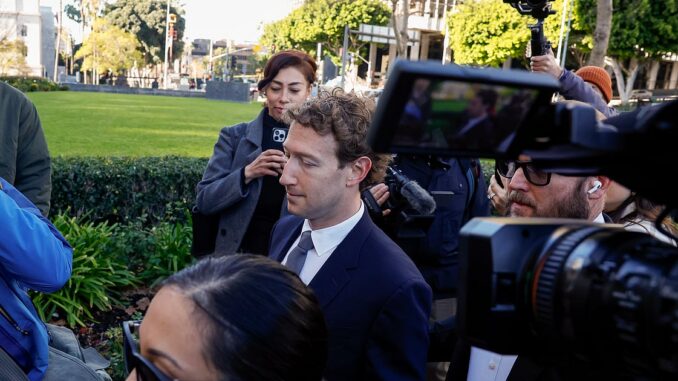
Meta’s executive director, Mark Zuckerberg, arrived at the Los Angeles courthouse this Wednesday, February 18, under the watchful eye of dozens of families and activistsmarking the beginning of one of the most anticipated testimonies in recent Silicon Valley history.
This trial, considered a “model case” (bellwether trialas this type of case is called in the USA), focuses on accusation that Meta and Google’s platforms were designed as “digital casinos” to deliberately addict the brains of young users.
At the entrance to the court, the atmosphere was one of emotion and protest. Several parents, some holding photos of children who have suffered mental health crises or who have died as a result of challenges and dangerous content online, awaited the mogul’s arrival. “We lost our children and there is nothing we can do about it. But we can inform other families that these platforms are dangerous and that they need limits”, said one of the parents present at the door of the hearing.
For these families, Zuckerberg’s presence on the witness stand represents a rare opportunity for direct confrontation with the man who leads the social media empire, after years of complaints about the harmful effects of infinite scrolling and recommendation algorithms.
What is at stake: design instead of the content
Unlike other processes, This trial focuses on design applications and not on the content published by users. The prosecution, led by lawyers for a 20-year-old woman identified as Kaley GM, maintains that Instagram and YouTube are “defective products.”
They argue that features such as constant notifications, automatic video playback and beauty filters were specifically “engineered” to keep kids hooked for hours, ignoring internal warnings about the risks of depression, anxiety and eating disorders.
During his testimony before the jury, Zuckerberg defended Meta’s security policies, although he was confronted with internal documents that suggest the company prioritized user growth and retention over the well-being of minors.
Meta’s CEO reiterated that the company is continually working to improve parental control toolsbut highlighted that there is always a “complex balance between security and freedom of expression”. In turn, Meta’s defense argued in court that the plaintiff’s mental health problems were rooted in pre-existing family and personal issues, and that social media served only as an “escape mechanism”.
This trial in Los Angeles is the first of more than 1,600 cases consolidated in the United States. If the jury rules against Meta and Google, the verdict could force drastic changes to the architecture of social networks and open the doors to multimillion-dollar compensation, forever altering the legal liability of Big Tech to its youngest users.
Leave a Reply