
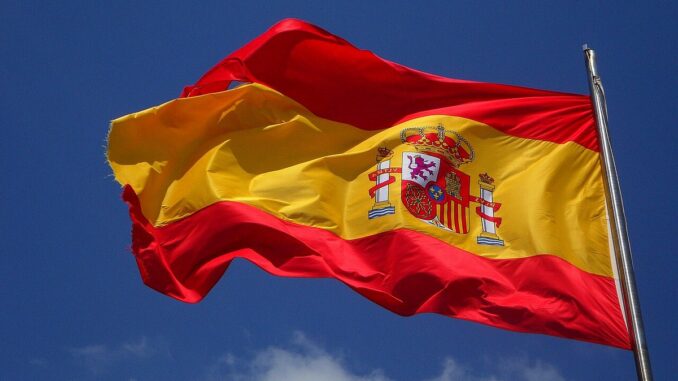
The minimum wage in Spain will increase by 3.1%, to 1,221 euros per month paid 14 times a year, according to an agreement signed this Monday, 16th, by the Government and the country’s trade unions.
The value of the new minimum wage (plus 37 euros per month) will now be approved by the Council of Ministers and will have retroactive effect to January 2026, without needing to go through parliament.
According to the agreement signed today, the minimum wage in Spain will continue to be exempt from taxes on individual income (equivalent to the IRS in Portugal).
The increase in the minimum wage in Spain is a Government prerogative, after consultation with the social partners (unions and employers’ associations), so it is not necessary to agree on all sides, as happened again this year, when business representatives spoke out against the increase formalized today.
The employers’ associations disagreed with the terms of the agreement and the way in which the negotiations took place and warned of the negative impact that successive increases in the minimum wage since 2018 are having on small and medium-sized companies, when a left-wing coalition, led by the socialist prime minister, Pedro Sánchez, came into government.
In these years, the minimum wage in Spain increased by 66% (it was 735.6 euros in 2018), to be 60% of the country’s average wage, the objective established by the Government.
Sánchez said today, at the signing of the agreement with the unions, in Madrid, that these increases are a matter of social justice, dignification of work and “economic intelligence”, highlighting that Spain’s economy is growing more than the European average and above that of large European countries.
The prime minister, like the union representatives, argued that the performance of the economy and the job market in Spain not only disproves, but also contradicts, “the predictions of economic disaster” due to increases of this size in the national minimum wage.
Sánchez lamented the absence of employers’ associations – which he said not to be confused with all businesspeople – from the agreement signed today, in a context of economic growth and “record, multimillion-dollar profits” from various sectors.
For the Government leader, if “everyone tightens their belts when they need to tighten their belts”, the same must happen when it comes to sharing profits and growth.
Both the executive leader and the leaders of the trade unions (CCOO and UGT) highlighted that the increase in the minimum wage has also been a factor in reducing wage inequalities in Spain, both gender and territorial.
Around 2.5 million people receive the minimum wage in Spain, the majority of whom are women who work in the services sector.
At the end of 2025, the number of people working in Spain reached 22,463,300, the highest ever in the country, according to the National Statistics Institute.
In parallel, the unemployment rate fell to 9.93% in the last quarter of 2025 (2.47 million people), falling below 10% for the first time since the beginning of 2008.
Spain has the second highest unemployment rate in the European Union (EU), after Finland, according to the most recent official European data.
As for the economy, the Spanish Gross Domestic Product (GDP) grew 2.8% last year.
According to the European statistical service Eurostat (which distributes the gross amounts paid in each country over 12 months to harmonize comparisons), the minimum wage in the EU varies between 2,704 euros paid in Luxembourg and 620 euros in Bulgaria.
In Portugal, it is 920 euros, paid 14 times a year (1,073 when the value is divided by 12 times, as in Eurostat statistics).
Of the 27 EU member states, 22 have national minimum wages, with the exception of Denmark, Italy, Austria, Finland and Sweden.
Leave a Reply