
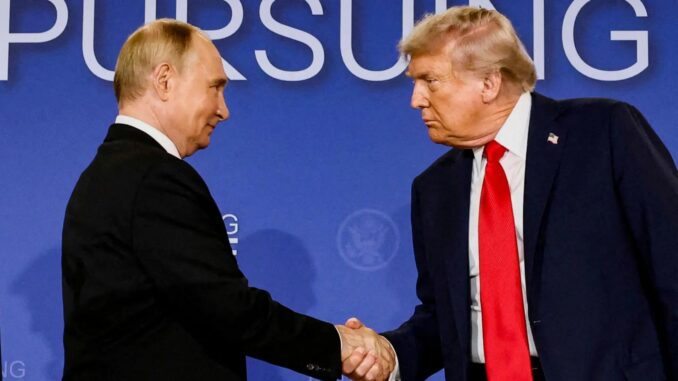
The Russian Government does not rule out resuming the use of the dollar in its international transactions, within the framework of open conversations with the United States to move towards the political and economic normalization of bilateral relations once peace is achieved in Ukraine.
Kremlin spokesman Dmitri Peskovhas stated before the media that “no one has abandoned the use of the dollar”; but, according to him, it was Washington who restricted its use to certain countries, including Russia.
The gesture, which represents a change in tone after years of strategy aimed at reducing dependence on the US currency, occurs in a context of discreet diplomatic contacts and speculation about a possible broader agreement linked to the end of the war in Ukraine.
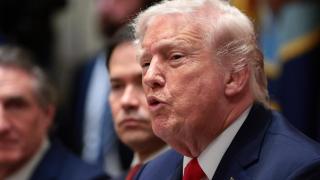
An internal Russian document leaked to Bloombergsuggests that the Russian Federation could settle in dollars again as part of a large agreement with the Trump Administration linked to the end of the war in Ukraine.
The plan that is supposedly proposed Vladimir Putin offer to Donald Trumpplans to gradually lift sanctions, cooperate on fossil fuels and sign large energy and aviation agreements.
Moscow, which intensified its de-dollarization process after the Western sanctions of 2022, thus leaves the door open to an eventual financial rebalancing if negotiations with Washington prosper.
This comes against a backdrop of negotiations with Ukraine, where talks are exploring not only an eventual ceasefire, but also the economic and financial conditions that could accompany a lasting peace agreement.
Monetary policy has become a key element of the diplomatic board, being directly linked to the gradual lifting of Western sanctions.
The core of the proposal focuses on Russia’s return to the dollar payment system, a move that would represent an unexpected turn in the country’s foreign and economic policy and that could have significant repercussions on international finance.
Washington has already raised the possibility of gradually lifting some sanctions as part of any peace agreement, an essential step so that Russia can return to operating normally in dollars.
Areas of common interest
The Russian document would aim for much more ambitious goals, including deeper economic cooperation with the United States that goes beyond simple normalization of transactions.
The Kremlin’s internal report identifies seven key areas where Russian and US economic interests could converge, offering a snapshot of potential deals that could transform global trade and energy.
Among those key sectors are strategic aviation, the return to the Russian market, the possibility of the United States recovering previous investments in oil and natural gas, as well as cooperating on nuclear projects.
In addition, it also highlights the possibility of the United States and Russia promoting traditional fuels in the face of low-emissions policies promoted by China and Europe, a nod to American interest in more conventional energies.
Overall, the Kremlin’s plan released by Bloomberg is as follows:
1. Strategic aviation: Modernize the Russian fleet with long-term contracts and possible American participation in manufacturing.
2. Oil and natural gas: Develop complex and offshore reserves, offsetting previous investments from the United States.
3. Return to the Russian market: Facilitate the return of American companies to the Russian consumer sector.
4. Nuclear energy and innovation: Cooperate on nuclear projects and promote the use of artificial intelligence.
5. Payments in dollars: Resume the payment system in dollars, including for energy transactions.
6. Critical raw materials: Collaborate in lithium, copper, nickel and platinum, essential for the technology industry.
7. Joint fossil axis: Promote traditional fuels against low emissions policies promoted by China and Europe.
Trump against China
Donald Trump’s main concern, as he has demonstrated with the latest geopolitical events, is trade, the economy and facing his main adversary, China.
In any case, Russia’s idea is not to distance itself from its main partner, but rather it aims to bring closer positions towards the United States.
Dmitri Peskov also pointed out during his speech that, if restrictions are lifted and the dollar becomes “attractive” for commercial transactions again, “everyone will use it again, even along with other currencies,” in reference to the current use of the yuan, the Chinese currency.
These proposals reflect not only economic interests, but also a strategic power game, in which Moscow seeks to balance relations with Washington without distancing itself from Beijing, while positioning itself on a highly volatile energy and financial board.
Indeed, China has become an essential supplier of critical components and resources since Western sanctions limited other sources.
For his part, the president of the United States, faced with Xi JinpingChinese president, since coming to power to exercise his second presidential term, plans to make a rapprochement with Moscow after reaching peace over Ukraine, which limits Beijing’s ability to influence.
In fact, the American president has already maintained direct contacts with Putin, including a summit in Alaska, where he tried to reach an agreement to end the war in Ukraine, although he was unsuccessful.
Leave a Reply