
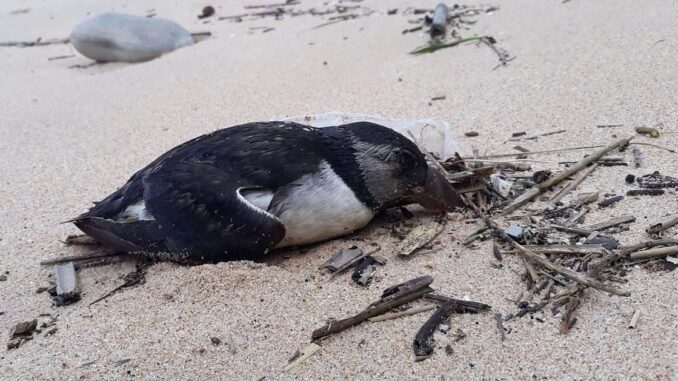
More than 400 puffins found dead on the Portuguese coast in recent days were counted by the Portuguese Society for the Study of Birds (SPEA BirdLife), which suspects that the phenomenon is related to storms in recent weeks.
The high number of birds washing up on the coast — the so-called strandings — is being recorded along the entire continental coast, and also in the Azores, with cwings of many dozens of bold birds on the north coast, in the Peniche region and on the coast of southwest AlentejoSPEA said in a statement.
“Cases are occurring along much of the coast, so it is very likely that the 400 records we have are just a small part of the total“, stated Hany Alonso, Senior Science Technician at SPEA, quoted in the statement.
Similar situations are being reported in Galicia, counting 400 records of strandings, and on the Atlantic coast of France with more than 200, which the organization considers to indicate a large-scale phenomenon in the European Atlantic.
Also following poor conditions at sea, in the winter of 2022/23, Portugal recorded more than 1,700 stranded puffins in just two weeks.
Storms can drive coastal birds to seek refuge on land, causing strandings of weaker birds, and in a storm train, with poor conditions for a prolonged period, rough seas and difficulty feeding, many birds are driven to extreme exhaustion.
In the case of puffins, if the birds have difficulty feeding for prolonged periods, they may see their physical condition deteriorate, ending up flying out already very exhausted and in poor physical condition.explains Hany Alonso.
To understand the true extent of strandings in Portugal, SPEA asked for citizens’ collaboration to register birds they see stranded on the ICAO platform (available online and as an App), which allows you to upload photos of birds that help confirm identification and determine the age of the bird.
Showing concern about the increasing frequency of extreme weather phenomena on the Portuguese coast, with climate change causing more and more storms, SPEA calls for measures to mitigate the negative effects of climate change.
Leave a Reply