
South Korea and the United States agreed to manage the implementation of a bilateral trade agreement “in a stable manner”, after Donald Trump threatened more tariffs due to delays in implementing the pact.
The South Korean Foreign Ministry said the consensus was reached in a meeting between Seoul’s head of diplomacy, Cho Hyun, and US Secretary of State, Marco Rubio.
In a statement, South Korean diplomacy said that Cho informed Rubio about South Korea’s internal efforts to implement the trade pact reached in November.
On the other hand, the ministry reinforces Rubio’s commitment to moving forward with nuclear energy agreements and ensuring US approval for Seoul to develop nuclear-powered submarines, integrated into the joint forces deployed on the Korean peninsula.
On January 27, the South Korean Presidency had already announced that it would reiterate to the United States its intention to comply with the November trade agreement.
“Given that the increase in tariffs only comes into force after administrative procedures, such as its publication in the Federal Register, the South Korean Government plans to convey to the North American side its desire to comply with the tariff agreement, while at the same time responding calmly and gradually,” the presidential office said in a statement.
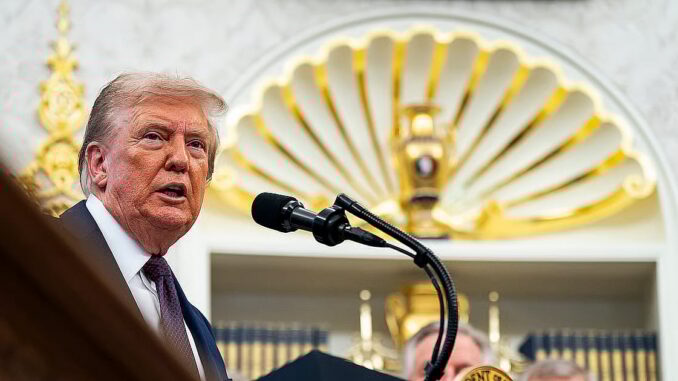
The statement came after the President of the United States, Donald Trump, threatened on the social network he owns, Truth Social, to increase tariffs on “automobiles, wood, pharmaceutical products and all other products subject to reciprocal tariffs” from 15% to 25%.
At the time, the South Korean Ministry of Economy and Finance said it would request parliamentary cooperation in processing the bill.
The document, presented to parliament in November, aims to support South Korea’s investment commitment of 350 billion dollars (296 billion euros) in the United States, part of the agreement that set a basic tariff of 15% for these sectors.
Some observers indicate that Trump’s threat could be aimed at speeding up the approval of the project, before the imminent decision by the US Supreme Court on the legality of the US Administration’s reciprocal tariffs.
Leave a Reply