
HAVANA, Cuba (AP).—The US President Donald Trumpsigned an executive order to impose tariffs on countries that supply oil to Cubaa measure that threatens to deepen the economic and energy crisis that crosses the island.
The provision establishes liens on assets of nations that sell or send “directly or indirectly” any type of oil to the Caribbean countrywith the aim of limiting access to the fuel necessary for the functioning of its economy.
The US president argued that Cuba representa an “unusual and extraordinary threat” for the national security and foreign policy of the United States, for which he declared a “national emergency” linked to the bilateral relationship.
Specialists point out that the measure could have a severe impact on the daily lives of Cubans, who already face shortages, inflation and prolonged blackouts resulting from a lack of energy.
According to official figures, Cuba produces around 40% of the fuel it consumes, But much of that oil can only be used in obsolete thermoelectric plants, with more than three decades of operation, while the rest must be imported in the form of diesel.
Until the beginning of this month, the island received approximately 35 thousand barrels a day from Venezuela, in addition to smaller shipments from Mexico and Russia, according to estimates by international experts cited by The Associated Press.
Blackouts in Cuba, common
Despite these supplies, blackouts have intensified in the last three years, con electrical outages of more than eight hoursthat affect water supply and food preparation in homes.
He economist Arturo López Levyresearcher of the University of Denverwarned that the executive order “is devastating” and could cause a humanitarian crisis by paralyzing the transportation of food and basic goods. López Levy also warned about a possible increase in migration, considering that the Cuban economy operates “at minimum” after a fall in the 15% of the Gross Domestic Product in the last six years.
Along the same lines, Ricardo Torres, an economist at the American University of Washington, pointed out that fuel is a transversal input, essential for transportation and industry.
From Cuba, President Miguel Díaz-Canel rejected the measure and stated that the United States lacks evidence to classify the island as a threat, accusing Trump of trying to “suffocate” the Cuban economy.
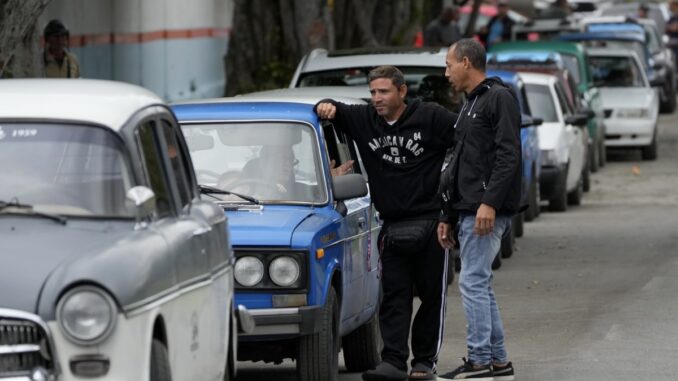
On the streets of Havana, citizens expressed concern about the direct impact on their daily lives, considering that the decision will affect the population and not the authorities.
Leave a Reply