
US natural gas futures closed higher this Thursday, after accumulating an increase of close to 75 percent in just three days, reaching their highest level since 2022, according to a Bloomberg report.
The rise is directly related to an intense cold wave that is hitting large regions of the United States, the main heating oil consumption markets, which has forced financial operators to cover bearish positions and has increased market volatility.
AN UNPRECEDENTED WINTER STORM
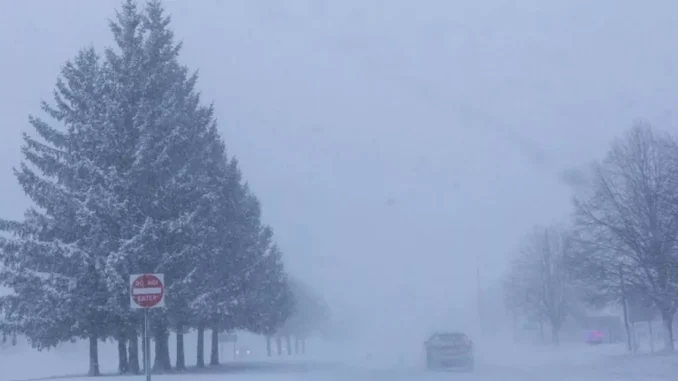
More than 175 million people will face snow, rain, sleet and ice over the weekend, due to record temperatures in the central and eastern regions of the country, in what is shaping up to be the biggest winter storm of the season.
Low temperatures increase the risk of water freezing inside gas pipelines, interrupting production and exports, just when consumption rises due to the intensive use of heating in homes.
VOLATILITY THAT HAS NOT BEEN SEEN FOR YEARS
Dennis Kissler, senior vice president of trading at BOK Financial Securities, underlined the magnitude of the phenomenon:
“We would have to go back to 2022, then 2018, to see this kind of volatility in US gas futures.”
Contracts for delivery in February closed at $5,045 per million BTU, after hitting an intraday high of $5,630, while the accumulated weekly advance reached 62.6 percent, shaping up to be the largest weekly gain in more than three decades.
RISK OF FREEZE IN THE PERMIAN BASIN
Randall Collum Jr., senior vice president of market analysis at Wood Mackenzie, warned that predicted temperatures in the Permian Basin, which could drop to minus 12 degrees, significantly raise the risk of production freezes.
“We will have a large amount of gas ‘locked’ in the Permian Basin, which will cause high prices for at least next week,” he estimated.
The specialist estimated that the affected production could be between 4 and 10 billion cubic feet per day, depending on the severity of the climatic event.
IMPACT FOR MEXICO?
Although Collum ruled out, for now, a direct risk to the pipelines that transport gas to Mexico, he acknowledged that there is always the possibility of damage to key infrastructure.
For his part, Oscar Ocampo, director of economic development at IMCO, pointed out that it is unlikely that a crisis like that of 2021 will be repeated, thanks to measures adopted by the Electric Reliability Council of Texas (ERCOT). However, he warned of financial risks:
“As long as the CFE maintains exposure at these levels, there is a risk. Frosts increase volatility and increase that risk.”
A STRUCTURAL VULNERABILITY
The situation revives alerts about Mexico’s high dependence on American natural gas. In 2021, a similar crisis caused losses of 106.3 billion pesos for the CFE.
The director of Pemex, Víctor Rodríguez Padilla, acknowledged before the Senate that this dependency represents a strategic risk:
“The enormous dependence we have on the US is not a simple dependence, it is vulnerability; if they turn off the tap, Mexico will be left in the dark.”
With information from El Financiero
Leave a Reply