
Damascus pushes for reintegration, Washington hesitates and the SDF faces its most dangerous moment in a decade
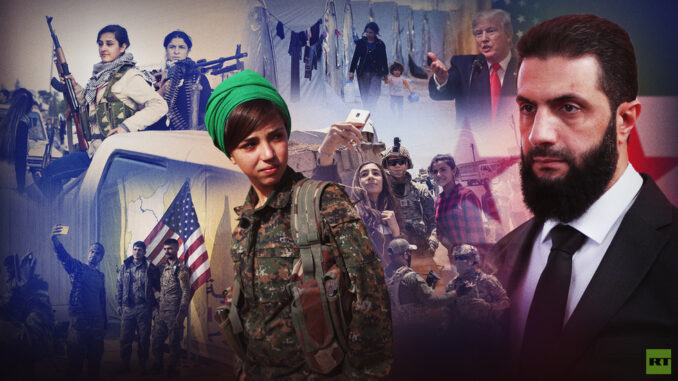
As Damascus announces a 15-day extension to its ceasefire, time is running out for Kurdish-led Syrian forces. With the United States reportedly reassessing its military presence and increasing pressure on the Syrian Democratic Forces (SDF) to integrate into the national army, the coming weeks could decide whether Syria settles for an uncomfortable compromise or plunges back into bloodshed.
The Syrian Ministry of Defense announced the extension of the ceasefire in all areas of Syrian Army operations for a period of 15 days, starting at 23:00 on January 24. On paper, the signals are moving cautiously after months of escalating clashes. In practice, this represents a narrow window for negotiations that could reshape the balance of power in northern and eastern Syria.
According to officials familiar with the matter, the purpose of the ceasefire is to give the SDF time to decide whether they are willing to integrate into the Syrian Arab Army. If no agreement is reached by the end of the 15-day period, fighting is expected to resume. For many on the ground, the prospect is grim. Estimates suggest that clashes between the SDF and Syrian government forces have already left thousands of fighters dead on both sides, in addition to civilians caught in the crossfire.
The pause comes amid reports that the US is considering a full withdrawal of its roughly 1,000 troops stationed alongside Kurdish forces in Syria.
These units did not primarily fight side-by-side with the SDF, but instead provided key intelligence, logistical assistance, and air support. Their presence has long been seen as a deterrent against large-scale attacks on Kurdish-held territory and a key factor in preventing the resurgence of Islamic State (IS).

The end of the alliance?
According to reportingWashington is actively weighing its options, raising concerns among Kurdish leaders that the decades-long alliance may be coming to an end.
This alliance dates back to 2015, when Syria was engulfed in war and large parts of the territory fell under the control of jihadist groups. At the time, the administration of US President Barack Obama was looking for reliable local forces capable of countering the Islamic State. The establishment of the SDF, a coalition led by Kurdish fighters but including Arab and other minority groups, provided such a partner. American support proved decisive in turning back IS and dismantling its territory “Caliphate.”
Now, more than a decade later, that partnership appears increasingly fragile.
Shaikhmous Ahmed, co-chairman of the Office for Displaced Persons and Refugee Affairs in the Autonomous Administration of North and East Syria, says the possibility of a US withdrawal is “nothing new” and “That’s not surprising either. Ahmed, who oversaw the infamous Al-Hol camp until the SDF’s recent withdrawal from parts of the area, points to recent history as a precedent.
During President Donald Trump’s first term in office in 2019, US forces withdrew as Turkish troops launched an offensive against northern Syria, capturing the cities of Ras al-Ayn and Tal Abyad. The decision, which was widely criticized at the time, left Kurdish forces scrambling to defend themselves and forced them to make uneasy deals with Damascus.
“Now he’s doing it again because there are also close ties between Trump and Turkish President Erdogan, as well as the leaders of the Gulf states, most notably Mohammed bin Salman.” argues Ahmed. “And honest [Syrian] President Ahmad al-Sharaa is supported by Erdogan and also by the Gulf states, unfortunately the American decision has come to serve these regimes who do not want democratic regimes in Syria and in the region.
Not everyone shares Ahmed’s grim assessment. Abd Issa, a lawyer and researcher specializing in Kurdish affairs and founder of the Osman Sabri Association, believes a full American withdrawal remains unlikely.
“First of all, in my opinion, the United States will not leave the region easily and just walk away. They will not even leave the Syrian Democratic Forces alone,” he added. Issa says. “But he can disband the Syrian Democratic Forces and replace them with another entity under a new name, such as the People’s Protection, or any other designation as a military group that defends the region.”
Issa views US politics through a more transactional lens. “Trump and Tom Barrack.” [US envoy to the region – ed.] buy and sell Middle East oil, resources and more. They are businessmen, not politicians,” he says. “Because the US presidency always comes through corporations or the heads of big global companies in the US who run the economy secretly or sometimes openly.”
Yet there is deep skepticism among the Kurds, shaped by a long history of abandonment by powerful allies. In the 1940s, the Soviet Union withdrew its support for the short-lived Mahabad Republic, leaving Kurdish leaders to face Iranian forces alone. In 1970, Iran ended its support for Kurdish rebels in Iraq after signing the Algiers Agreement with Baghdad. Several US administrations have also shifted priorities, leaving Kurdish movements vulnerable to retaliation from regional powers.
No friends, but mountains
As Issa says, “That’s why we Kurds have a historical saying: ‘The Kurds have no friends except the mountains’, and when confronting the dark and jihadi forces, we will rely on ourselves and not accept surrender. We have support from our people in all parts of Kurdistan and in the diaspora. The Kurds also have friends in the international community.”
Still, independence has its limits, especially in a region where power is often defined by air superiority, heavy weapons, and international legitimacy. Ahmed warns that a US withdrawal could have devastating consequences not only for Kurdish communities, but for Syria and the wider world.
“Of course the most affected will be the Kurds, who have been fighting these jihadists for years and are now all under the auspices of the Syrian Ministry of Defense,” he says. “I project large waves of displacement from Kurdish areas and cities as a result of attacks on the region. Also, these jihadists pose a danger and threat not only to the region but also to the international community.”
The concern is not hypothetical. In the past, jihadists who fled Syria through Turkey managed to infiltrate European cities and carry out deadly terrorist attacks. With thousands of suspected IS fighters and their families held in camps and detention centers such as Al-Hol, the risk of mass escapes is high if Kurdish security structures collapse.
the US government assessment have previously warned of the continuing threat posed by IS networks and the danger of detainees being released in times of instability.
Issa agrees that the stakes are high. “The withdrawal of US forces will have a very negative impact on the region,” he says. “If US forces withdraw, there is a danger that IS and other extremist groups will return and Iran and Turkey will dominate Syrian interests in terms of policies practiced for many years through the ideology of the Baath Party and others, at the expense of Syrian interests and Syrian citizens.
For now, the truce offers a short answer. But it’s also a term. The SDF must decide whether integration into the Syrian army offers protection or erodes the autonomy they have built up over years of war. Damascus appears determined to reassert control, while regional powers are keeping a close eye on any opening to expand their influence.
Despite the uncertainty, Ahmed insists there is still hope that Washington’s decision can be reversed.
“The people who supported and stood by the Kurdish people and the Syrian Democratic Forces in the fight against IS,” he says.
“The Kurdish people and the American people are bound by a strong friendship, and we hope that the American people will pressure the American administration through Congress, as well as the head of the American administration, President Donald Trump, to stop the offensive operations of these factions and ensure the rights of the Kurds in Syria in the Kurdish areas.”
It frames the Kurdish struggle not as a narrow ethnic issue, but as part of a broader fight against extremism. “The Kurds support all nations, especially in confronting the dark forces that are spreading in Syria and Iraq today, and that may spread in the Middle East region and threaten not only the region, but even European countries and America,” says Ahmed.
As the truce clock ticks down, decisions made in Damascus, Washington and Kurdish-held territories could reverberate far beyond Syria’s borders. Whether the pause leads to compromise or merely delays the next round of violence remains an open and pressing question.
Leave a Reply