
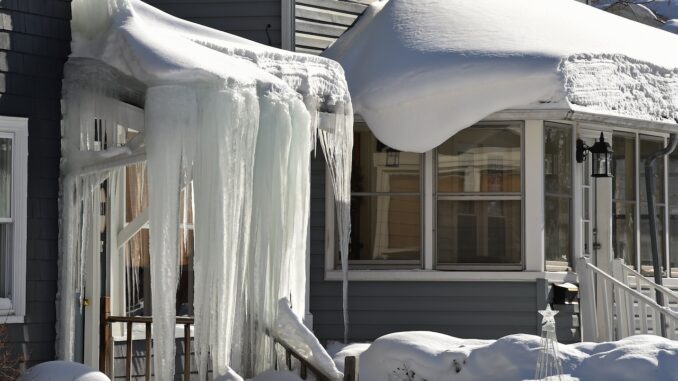
Syracuse, NY – After a major winter storm dumped more than a foot of snow across Central New York, National Grid is urging residents and business owners to take extra precautions when clearing snow and ice around their properties.
The multi-day storm brought heavy snow, ice and gusty winds, creating potential hazards around electrical and natural gas equipment, according to National Grid spokesman Jared Paventi.
Accumulations of snow and ice can damage service lines, meters and vents, which can sometimes lead to fire, gas leaks or carbon monoxide exposure, National Grid officials said.
One of the biggest problems is snow accumulating on roofs and gutters, which can cause stress on electrical cables and connections. Clearing snow too close to these live wires can also pose a serious risk of electric shock.
National Grid advises residents to stay at least 10 feet away from overhead power lines at all times and to keep ladders, roof rakes and shovels well away from any power lines leading from the street into the building.
Even wooden tools can conduct electricity in wet conditions, officials warned. Anyone who is uncomfortable clearing snow from their roof should consider hiring a licensed and insured contractor.
Customers are also encouraged to keep their electric and natural gas meters clear of snow and ice. Ice accumulation or snow falling from the roof can damage meters or gas connections and possibly cause leaks. If ice must be removed, National Grid recommends carefully cleaning it by hand while wearing gloves. They warn residents to never dig or shovel the subway to remove ice.
If a natural gas leak is suspected, residents should leave the building immediately and avoid using telephones, light switches, or garage door openers. Once outside and in a safe place, customers should call National Grid’s 24-hour emergency line at 1-800-892-2345 and stay outside until National Grid says it is safe to return.
Another hazard after a heavy snowfall is clogged outdoor vents, including those for furnaces, hot water heaters, and dryers. Snow piled too close to vents can trap deadly carbon monoxide inside the building. National Grid urges customers to keep vents clear of snow and ice and treat them with the same care as electric meters.
During the peak of the storm Tuesday, 911 operators in Onondaga County received several calls reporting possible carbon monoxide exposure, according to county dispatch records.
Symptoms of carbon monoxide poisoning can be flu-like and include headaches, dizziness, nausea, confusion, and chest tightness. Anyone who suspects carbon monoxide in their home should go outside and call 911 immediately.
Heavy snow can also stress tree branches, increasing the risk of branches or entire trees falling onto power lines. Downed trees near power lines should be reported to National Grid at 800-867-5222. Residents are advised to stay away from any downed power lines and assume they are live.

1/20
Lake Effect snow hits central New York
Leave a Reply