
The big warning sign, he emphasizes, would be not having this reaction or not dealing with the situation according to the scale it had, with there also being great concern about the future, because, as Joana Correia highlights, “the mental health problems that will result from this situation are not assessed now, nor in four weeks, but in three months. Now, we are facing expectable reactions, in three months we will have delayed reactions to stress. And what concerns us is the volume of support needs that will exist at that time, when what is normative can become symptomatological and pathological”.
This is the real concern and one that, as healthcare professionals, everyone needs to be aware of. But Joana Correia, director of the Psychology Service at ULS in Leiria, says she is “an optimistic person”, especially because she sees that people, health professionals or just citizens, “are rolling up their sleeves, they are helping those who need a new roof or the neighbor who needs food”.
Therefore, if there is a message or learning that can be learned from an experience like the one experienced by Leiria and the adjacent municipalities in the last week of January, with the passing of Kristin’s depression, it is that “resilience is one of the characteristics that accompanies human beings, who in the midst of total destruction are empathetic and willful”.
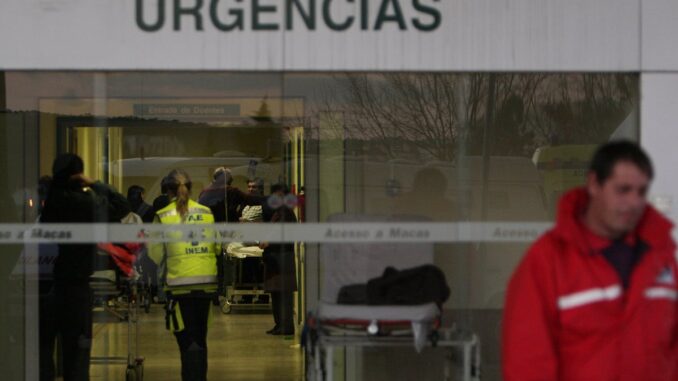
There are health units, like the one in Leiria, that had to suspend scheduled activities, consultations and surgeries, to dedicate themselves to urgent situations. They were running on generators for days. There are professionals who had to “jump trees” to get to their workplaces, because they had to provide clinical assistance or save “medicines and vaccines” from the lack of electricity. In the first days following the storm, the Leiria emergency department alone received more than 500 episodes of trauma, caused by the aftermath work. During the storm period, four fatalities were recorded in the area alone, although this number has now risen to 12, due to falls during roof reconstruction.
As we were told by the vice-president of the Central Zone Doctors’ Union, Rafael Henriques, “in the first few days we were in minimal service, there were professionals whose houses were destroyed, without their cars or had to stay with their children”, but “on Monday, February 2nd, the units, even with broken roofs, windows or doors, began their normal activity”.
According to recent data, ULSRL has 2,463 professionals, 435 doctors, 980 nurses, 172 complementary diagnostic technicians, 209 technical assistants, 602 operational assistants and 166 other professionals. For everyone, the great The expectation now is: “When will everything go back to normal?”
Leave a Reply