
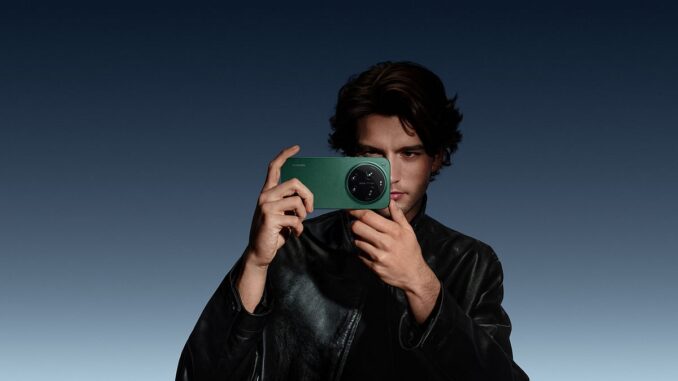
Xiaomi revealed this Saturday, February 28th, its new generation of smartphones top of the line: the Xiaomi 17 Series. The launch marks the culmination of a partnership with Leica that evolved from Innovation & Development (R&D) to a Strategic Co-creation Model that leads to transversal integration throughout the device development process, resulting in devices that challenge the boundaries between mobile photography and professional cameras.
Hence the Xiaomi 17 Ultra, the top of the range in the series, brings unprecedented photographic innovations in the world of smartphones. The device introduces the new Summilux lenses from the APO (Apochromatic) segment, a technology that uses extra-low dispersion glasses to correct chromatic aberrations much more effectively than conventional lenses.
Tiago Flores, country manager from Xiaomi in Portugal, highlights the relevance of this innovation: “We are bringing more glass and a much more complex optical composition into a smartphoneelevating image fidelity to a level that was previously unthinkable in this format.”
Also included in the lens set, and perhaps even more noticeable, is a variable focal length telephoto lens. Unlike the zoom digital, which sacrifices resolution through algorithms, the Xiaomi 17 Ultra is equipped with a system that uses a device with real physical movement of the lenses inside the body of the equipment. “We managed to make a zoom real optical, physical, with the lenses moving internally between 75mm and 100mm”, explains the person in charge.
With a range that reaches the equivalent of 400mm (17.2x), the user can thus benefit from a sharpness that only the zoom optics allows. “It’s like having a professional lens attached to your cell phone. You don’t lose quality when you get closer to the object”, adds Flores.
In the main sensor, Xiaomi debuts the one-inch Light Fusion 1050L, equipped with LOFIC technology. This state-of-the-art capacitor system increases the full well (FWC), allowing the sensor to process a significantly greater amount of light without saturating the brightest areas. The result is benchmark HDR performance, with a dynamic range that preserves minute details, both in deep shadows and bright skies.
The rise of the luxury segment
Xiaomi’s strategy for 2026 is clear: to consolidate itself as a reference brand in the segment premium. According to Tiago Flores, this group of products (which includes the main series and the T-Series) registered a growth of 40% in 2025 compared to the previous year. In a market smartphones which shows signs of maturity and stagnation, the segment premium is the only one that continues to attract new fans willing to invest in “upgrade“technological.
Leave a Reply