
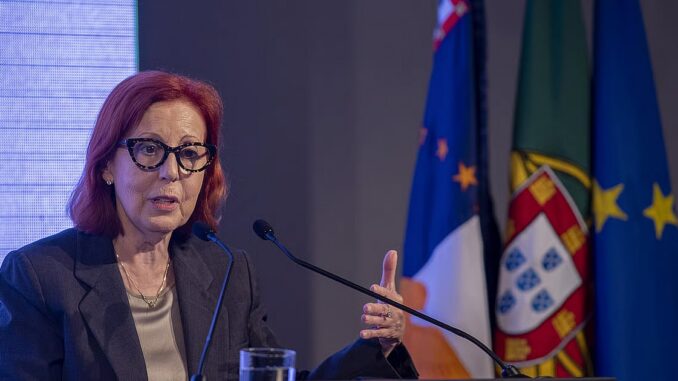
Maria da Graça Carvalho, Minister of Environment and Energy, was not informed of the appointment of nurse Fábio Teixeira as coordinator of the Mission Structure for Licensing of Renewable Energy Projects (EMER) and became aware of the appointment through the media.
An official source from Maria da Graça Carvalho’s office told Lusa that the minister, “being a professor and researcher in the field of Energy, could never agree to the appointment of a professional who was not from the field to a structure as specialized, specific and vital as EMER”.
Meanwhile, as Lusa reported, Fábio Teixeira resigned from his position less than a week after his appointment, and the resignation request was accepted by the president of EMER 2030, Manuel Nina.
On Wednesday, the president of the structure had justified the appointment, highlighting that it met legal and technical criteria and highlighting Fábio Teixeira’s experience in managing projects and procedures
The appointment generated controversy due to the fact that the president did not have professional experience in the areas of environment, sustainability or renewable energy.
According to the CV note associated with the order, Fábio Teixeira has a degree in Nursing from the Escola Superior de Enfermagem do Porto since 2018, with a postgraduate degree in Project Management from Porto Business School and professional certifications in project management (PMP) and agile methodologies (CSPO).
Fábio Teixeira’s professional career includes roles as a project manager in technological consultancy, with the development and implementation of software, as well as positions in government offices, where he provided technical advice and project monitoring, namely in the office of the Minister of Culture, Youth and Sports, Margarida Balseiro Lopes.
The internal coordinator would be responsible for managing the structure, including monitoring tender procedures, financial management and public procurement.
EMER, created in March 2024, has the mission of streamlining the processes for implementing renewable energy projects included in the Recovery and Resilience Plan (PRR) and, according to the Minister of Environment and Energy, it will be extinguished at the end of this year, after completing the planned tasks.
Questioned on Wednesday by Lusa, the Ministry of Environment and Energy had indicated that the internal management of the structure, including the reinforcement of teams, is the exclusive responsibility of the president of EMER, also highlighting that the work is at an advanced stage, with projects such as the implementation of the one-stop licensing window, the transposition study of the RED III directive on renewable energy acceleration zones and the development of tools to support municipal licensing.
Leave a Reply