
The keys
nuevo
Generated with AI
nuevo
Generated with AI
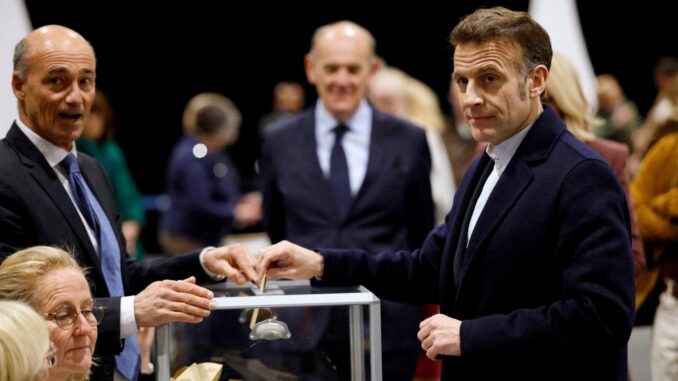
The advance of the extreme right and the extreme left marked this Sunday the first round of the French municipal electionsin which the socialists resisted in the big cities while the moderate conservatives maintained their hegemony in rural France.
Ephemeral satisfaction with the progress of the two extremes that, if confirmed in the second round next Sunday, can prefigure a bipolar outlook for the 2027 presidential electionsof which these municipal ones are a general rehearsal.
For this reason its leaders, the socialist Olivier Faure and the conservative Bruno Retailleauthey appealed to a cordon sanitaire to rule out the extremes.
A compromised position for the socialists, who may see their victory compromised in some of their fiefdoms, such as Paris or Marseille, if they reject the merger with the ‘melenchonistas’, although Faure rejected all national pact with them. They will have to be specific agreements.
This opens the door to the negotiation game for the second round, which will run until Tuesday, when all the lists will have to be outlined for next Sunday. Candidates who have obtained more than 10% of the votes can remain or merge their lists.
A situation that could be key both in Paris and in Marseille, where the socialist candidates received the most votes, but where their election will depend on the game of alliances.
Marseille and Nice
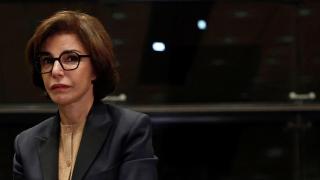
In the capital, Emmanuel Grégoireformer right arm of the current mayor, Anne Hidalgobefore distancing himself from her, was associated with communists and environmentalists, and received around 40% of the votes, compared to 25% for the conservative Rachida Dati. But he warned that “the right can win” if, as he predicted, “they merge their forces.”
Her only source of votes comes from those achieved by the leftist Sophia Chikirouwhich obtained 12% and which warned that it will only withdraw if a list with Grégoire’s is achieved.
Data, exministra de Cultura de Emmanuel Macronwill have to count on the centrist Pierre-Yves Bournazelwhich also achieved 12% of the votes and to which he appealed to join forces.
Swords are also raised in Marseille, where the current socialist mayor Benoit Payan He got 38% of the votes but sees his position threatened by the rise of the far-right Franck Allisowhich obtained 33%.
The leftist Sebastien Deloguwhich had 12%, also extended its hand for the second round, in what may constitute another pact with the extreme left.
The country’s second city appears as the main possible prey of the extreme right, whose leader, Marine Le Penspoke of an “immense victory” and appealed to unite all the right in the second round.
The other focus of attention was Nice, where the candidate supported by the extreme right Eric Ciottiwas the most voted with 43.5% of the votes, well ahead of the current mayor, the centrist Christian Estrosiwith 30.8%.
The extreme left ‘melenchonita’ also appeared satisfied. If in 2020 they preferred not to campaign in the municipal elections, now they achieved results much higher than expected.
The green wave falls
In addition to having the key to Paris, Marseille and Lyon, they are in a good position to conquer Lille, a traditional socialist bastion, where their candidate, Lahouaria Addouche, tied with the current councilor, Arnaud Deslandes.
Mélenchon applauded his strategy and assured that, in addition to the northern city, Roubaix, Limoges, Saint-Denis or Toulouse can sign up, “a real wave” for a party that until now was absent in the Mayor’s Offices.
Conversely, the so-called “green wave” that surprisingly led environmentalists to govern several large French cities in 2020 appears to be weakening six years later.
In Lyon, the country’s third largest city, the outgoing mayor Gregory Doucet and the businessman Jean-Michel Classesformer president of the Leónés Olympic football club, finished neck and neck (37.5%), and the key to the tiebreaker in the second round may be held by the candidate of La Francia Insumisa, Anaïs Belouassa-Cherifi (9.7%), already ready for a “technical fusion.”
Environmentalists are also the outgoing mayors of Strasbourg, Bordeaux, Grenoble, Tours, Annecy, Besançon and Poitiers, and their luck in this first round has been very uneven.
So, for example, Pierre Hurmic achieved first position in Bordeaux, like Eric Piolle in Grenoble, while in Strasbourg Jeanne Barseghian she received a setback when she placed third.
The ‘Macronists’ also found few reasons for satisfaction. Only the former prime minister Édouard Philippevery far from the president, Emmanuel Macron, whom he aspires to succeed, achieved a good result in his city, Le Havre, despite the poor omens of the polls.
Leave a Reply