
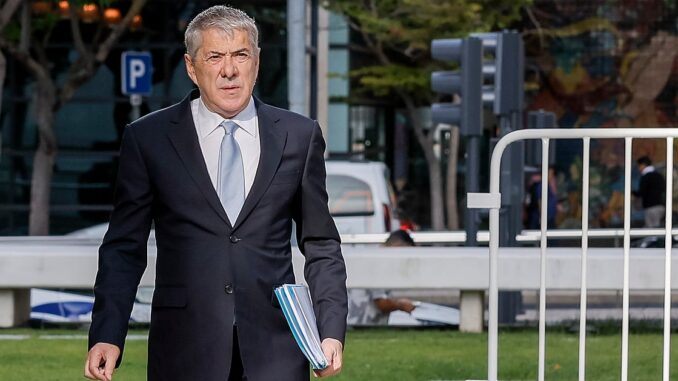
The trial of the Operation Marquês case resumes on Tuesday, March 17, in Lisbon, after three weeks of interruption – the third due to the resignation of a lawyer for former Prime Minister José Sócrates.
Here are the essential points of the trial in which a former head of government sits in the dock for corruption for the first time:
Defendants
José Sócrates, 68 years old and Prime Minister between 2005 and 2011, is one of the 21 defendants who began to be tried on July 3, 2025 in the Operation Marquês case, at the Central Criminal Court of Lisbon.
Businessman Carlos Santos Silva, former banker Ricardo Salgado, former administrator of the Lena group Joaquim Barroca, former administrator of Caixa Geral de Depósitos (CGD) Armando Vara, and former administrators of the former Portugal Telecom (PT) Henrique Granadeiro and Zeinal Bava are among the other defendants.
Crimes
The 21 defendants, who deny any illegality, are accused (after being instructed) of 117 crimes of corruption, money laundering and qualified tax fraud, which were committed between 2005 and 2014.
José Sócrates is responsible for 22 crimes: three of passive corruption of a political office holder, 13 of money laundering and six of qualified tax fraud.
Suspicions
José Sócrates is suspected of having received money to benefit the Lena group, the Espírito Santo Group (GES) and the Algarve resort of Vale de Lobo, using front men, such as Carlos Santos Silva, and bank accounts abroad.
The construction of the section of the high-speed line (TGV) between Poceirão and Caia, which never got off the ground, PT’s business in Brazil and the concession by CGD to Vale de Lobo of a credit considered ruinous are some of the dossiers in question.
Prescriptions
The oldest corruption crimes, related to Vale do Lobo, may expire during the first half of this year, the court told Lusa in November.
Questioned again last week, the court claimed “that any indication of a statute of limitations date at this time would be imprecise and untimely”, as this will result from what is proven at trial.
Lawyers
Since he was arrested upon arriving at Lisbon airport, on November 21, 2014, José Sócrates has had four lawyers appointed by him: João Araújo, who died in 2020, and three who renounced the defense since November 2025, during the trial – Pedro Delille, José Preto and Sara Leitão Moreira.
In order not to interrupt the trial, four officers were also appointed successively, at random: Inês Louro, José Manuel Ramos, Ana Velho and Marco António Amaro.
Waivers
Pedro Delille resigned on November 4, 2025, speaking in a “mock trial”; José Preto on January 13, 2026, when he was hospitalized and to “give the defendant back his freedom and restore his defense rights”; and Sara Leitão Moreira on February 24, as there was no time to prepare the defense.
José Preto and Sara Leitão Moreira wanted at least five months to hear the case, but the court gave them only ten days, invoking the principles of “continuity of the trial hearing, procedural speed” and the right to a decision “within a reasonable time”.
Restart
The trial resumes on Tuesday with the first of around 20 sessions aimed at listening to recordings of the statements of the accused at the investigation and in the investigation (102 hours and 57 minutes) and of witnesses who have already died (7 hours and 30 minutes).
Scheduling was the most recent way found by the president of the group of judges, Susana Seca, so that future lawyers for José Sócrates have time to prepare the defense, without interrupting the trial.
Future
The Lisbon Regional Council of the Bar Association clarified, on March 3, that it could not guarantee that an unofficial lawyer would ensure the continuity of the trial, as requested by the court, with Marco António Amaro resigning, on March 10, from the appointment.
The president of the Association of Portuguese Judges, Nuno Matos, asked, on February 24, to reflect on whether it is necessary to change the law to respond to a “carousel of resignations”, such as the Operation Marquês process.
Leave a Reply