
The keys
nuevo
Generated with AI
nuevo
Generated with AI
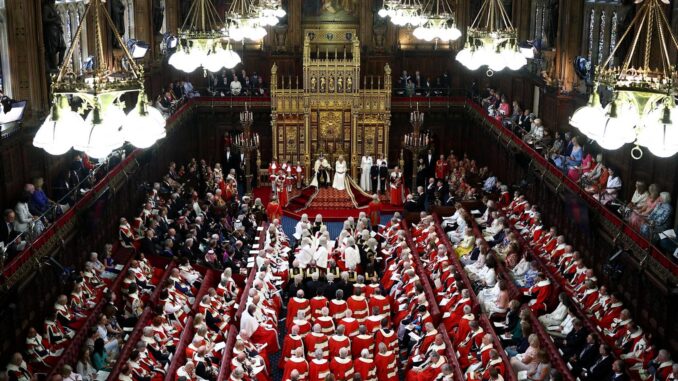
This Tuesday, the House of Lords British has approved the final version of the bill that will expel the last 92 representatives who received the title through hereditary means. This ends a long process of democratization that began in 1999, under the Labor Government of Tony Blairwhen more than 600 pairs were removed.
The current prime minister, Keir Starmerpromised in his campaign for the July 2024 elections to undertake a phased reform of the House of Lords. In addition to eliminating inherited positions, Starmer wants to impose age limits and demands for participation in debates.
This measure will mean that dozens of aristocrats British leave their seats after centuries of presence of their predecessors in the decisions of the political life of the United Kingdom. The Lords themselves backed the text after the Labor government offered to Conservative Party rival fifteen lifetime seats to compensate for the loss of representatives.
Nick Thomas-SymondsMinister of the Cabinet Office of the Starmer Government, declared that this rule puts an end to an “archaic and undemocratic principle.” Seven centuries of political privilege of the aristocracy thus end.
“Our parliament should be a place where merit and talent are always recognized,” he said. “Not the place where a collection of noble titles dating back centuries of history is gathered and which maintains its power above will of the citizens,” he added.
The government representative in the upper house, the Baroness Angela Smithstressed that this is a “historic” law. He clarified that the objective is not to judge the individual contribution, but to modernize a chamber criticized for maintaining members who received the title by inheritance.
The process of the law
Once the final text is approved, the law must be submitted to the royal sanction. This procedure will take place in the coming weeks and from the signature by Carlos IIIhereditary lords who have not been made lifers will lose their right to sit and vote in the House.
A solemn ceremony to close the sessions has been planned for later in the session. primavera. The event must take place before royal speechscheduled for mid-May, a week after the local and regional elections.
The British Parliament
Legislative action corresponds to the House of Commonsmade up of 650 democratically elected deputies. They approve the laws, the texts of which are sent to the House of Lords for your review. This can propose amendments or return them to the lower house and thus make their parliamentary process difficult.
The upper house includes more than 800 members elected by the partiesamong them 26 bishops of the Church of England and the 92 hereditary ones who will leave it soon. It plays an important role in the British democratic system, as a counterweight to the decisions of legislators.
Leave a Reply