
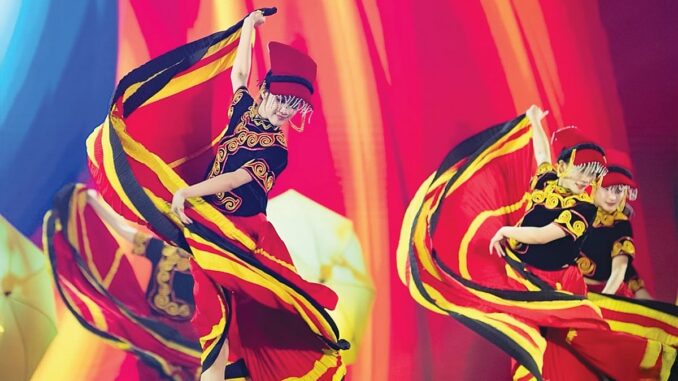
On the second day, people gather around the sacred fire on the altar to participate in various traditional activities. Young people, imitating the hero Atilaba, take part in horse racing, wrestling, singing and bullfighting competitions. Laughter, music and dancing abound everywhere, and everyone gets caught up in the festive atmosphere.
During the festival, countless torches light up the night sky, creating a truly stunning scene. People sit around campfires, sing, dance and share stories, all while enjoying local food and drinks.
The celebrations reach their peak on the third day, with the farewell fire ceremony, which symbolizes the end of the festival and the symbolic sending of the fire back to heaven.
The Torch Festival is not only a celebration of fire, but also a celebration of the culture and traditions of the people doremembering the deep connection between these people and fire, as well as the richness of their cultural heritage. By participating in the festivities, visitors can experience the vitality of the community up close. do and the unique charm of the Torch Festival.
Over time, the Torch Festival integrated modern elements, including multimedia shows, traditional singing and dancing performances, creative craft fairs and gastronomic fairs.
During the Festival, visitors can sample specialties dolike tuotuorou (cubed pork) and kuqiao father (bitter buckwheat cake), experience the artisanal production of lacquerware do and silver ornaments, and experience traditional hospitality rituals, such as the “welcome wine” with which hosts welcome guests. These elements not only enrich the festival, but also promote the preservation and dissemination of culture do.
Leave a Reply