
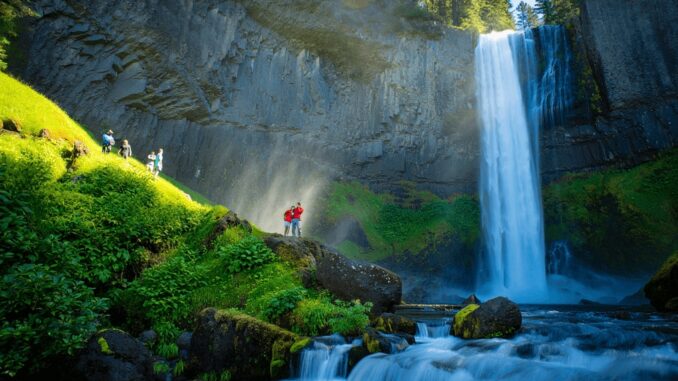
The iconic Abiqua waterfall, located in Oregon and until now on private land, will go into public hands after the state agreed to purchase it. The operation seeks to guarantee citizen access and protect the environment without turning the site into a massive infrastructure hub.
A natural gem that changes owners
Abiqua Falls—a type of waterfall plunge which descends about 92 feet (approx. 28 meters) over moss-covered basalt columns—is located near Scott’s Mill. The landscape offers a direct encounter with nature, with basic trails and minimal infrastructure.
Since 1908 the property had been linked to Mount Angel Abbey & Seminary and its foundation. The monastery put the land up for sale on February 2, and recently agreed on a price that facilitated its acquisition by the state.
How the purchase is financed
The project was included in the state financing proposal known as SB 5701a package of 500 million dollars destined for works and maintenance on several fronts.
- $2 million specifically intended for the purchase of the site
- 42 acres that immediately surround the waterfall
- 160 acres additional upstream, owned by a logging company
- Negotiation promoted by the senator Fred Girodwho facilitated the inclusion in the budget package
According to state officials and representatives of the abbey, the transaction was designed to maintain the tradition of public access that the community has had for decades. The Abbey Administration expressed its confidence that the state will take care of the conservation of the place.
Will there be a state park or massive intervention?
There is no defined plan to transform Abiqua into a large state park with expanded parking or intensive trails. The main idea, replicating the previous position of the abbey, is to preserve the environment as it is and prevent tourist pressure from degrading the microhabitat.
Among the management alternatives being considered are transferring ownership to the county or the Department of Forestry of the state, instead of developing infrastructure that could cause crowding.
Practical implications
- Public access assured in the medium term, although operational details have yet to be defined.
- Probable management oriented toward conservation rather than mass tourism.
- Possible parking limitation and visitor control to preserve the area.
- The purchase prevents the property from passing into hands with intensive development interests.
The acquisition of Abiqua Falls is a recent example of how state administrations can intervene to protect natural spaces and ensure that future generations enjoy landscape resources without sacrificing their ecological integrity.
Similar items

Alonso Delgado covers the international news with rigor. You’ll find accurate and relevant reporting on major global events, from political crises to diplomatic breakthroughs.
Leave a Reply