
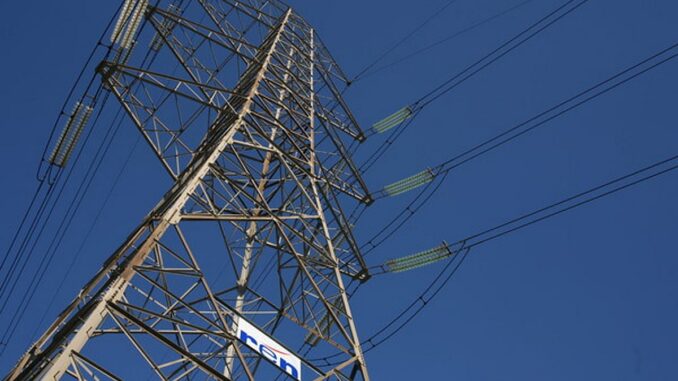
Portugal has gas transport and storage capacity adequate for the size of the market, but no European country has enough reserves to last several years without imports, an official source from Redes Energéticas Nacionais (REN) told Lusa.
In a written response to the question whether Portugal has sufficient gas transport and storage capacity to deal with external shocks, such as the escalation of tension in the Middle East, REN explained that the national gas system “has transport and storage capacities appropriate to the size of its market”, including the redundancies required by national and European legislation and regulations.
Portugal has enough gas reserves for around 93 days of consumption in the event of a disruption, as the National Entity for the Energy Sector (ENSE) recently indicated to Lusa, adding that national imports have no exposure to the Strait of Hormuz in the quantities acquired and transported.
Even so, REN – responsible for managing the national gas system, including storage – highlighted that “no country in Europe has sufficient reserves for a multi-year horizon without imports”.
Asked about the contingency plan in case there is a sudden increase in demand or temporary interruption of supply, she assured that “the national authorities, to face crisis scenarios, have response plans for different levels of crisis, including contingency and national emergency plans”.
According to data from the Gas Infrastructure Europe (GIE) platform consulted by Lusa, gas storage levels in Portugal (76.72%) remain close to maximum capacity, well above the European average, which is significantly lower at the moment (29.40%), taking into account that we are at the end of winter, the season of highest consumption.
However, in absolute terms, Portugal has one of the smallest storage capacities in the European Union, which means that filling levels often appear close to the maximum in percentage terms.
The reinforcement of gas storage capacity in Portugal was announced in 2022, in the context of the energy crisis triggered by the war in Ukraine. On that occasion, the then Secretary of State for Energy, João Galamba, moved forward with the creation of a national strategic gas reserve and the reinforcement of storage capacity in the Carriço underground complex, in Pombal.
The construction of two new underground caves is planned, with an additional capacity of more than 1.2 terawatt-hours (TWh) and an estimated investment of around 90 million euros.
The Gas Network Development and Investment Plan (PDIRG 2026‑2035) indicated a forecast for sequential entry into operation between 2027 and 2028, although implementation depends on the final investment decision, licensing and objectives defined by the grantor.
Asked to comment on the status of this infrastructure, REN simply said that “the time horizon for the entry into service of two new gas storage cavities, presented in the PDIRG, is indicative and its effective implementation depends on the intended date/objective and the approval decision, accordingly, of the Grantor”, that is, of the State.
The conflict with Iran once again put the global energy market on alert after Tehran declared control over the Strait of Hormuz, through which around 20% of the world’s oil and a significant part of liquefied natural gas (LNG) pass.
Although Portugal is not directly dependent on the Middle East, changes in supply or risk perceptions may be reflected in oil, gas and electricity prices in the country.
According to 2024 data from the Directorate-General for Energy and Geology (DGEG), in the case of natural gas, Portugal has been supplied mainly by Nigeria (51%) and the United States (40%), having stopped purchasing gas from Qatar more than three years ago.
Leave a Reply