
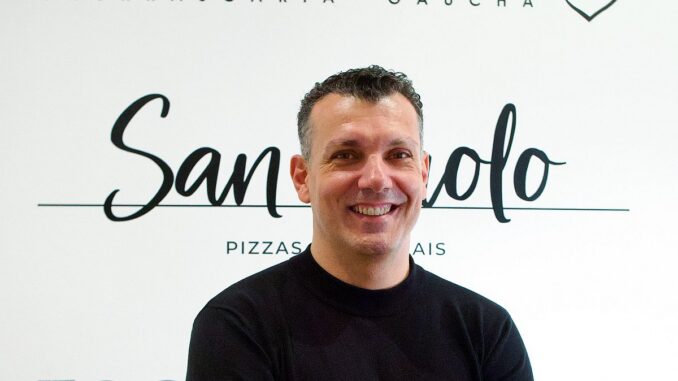
In the first few months, reality was harsh. He tried to get a job in his home area, but didn’t get it. He spent weeks without work until he accepted what came his way: washing pots at Doca de Santo. “It was what I needed to survive. I had never messed with cooking before.“, remember.
From then on, Saulo picked up the pace of his serve. From pans he moved to salads, then to the stove. In about two years, I was already taking on more responsibilities. When the group decided to expand Capricciosa and brought in an Italian chef to form the team, Saulo was identified as someone who understood not just execution, but process. “Kitchen is management. Purchase, stock, planning, production flow”explains. Previous experience in the furniture industry helped him see the restaurant as an organized line, where waste and lack of control are costly. “I stood out when it came to purchasing. I was able to organize processes better”, he adds.
It ended up being more than 12 years in the group which, according to him, reached turnover around 20 million euros per year and employing more than 300 people. The breaking point came when the owners began negotiating the sale of the business. Saulo could have stayed, but he chose to leave and start his own business journey. Brazilian that he is, he opted for one of our passions: barbecue.
The trajectory of Fogão Gaúcho
That was how, in 2017, he opened his first restaurant in Carregado, in the northern region of Greater Lisbon. The decision to open a steakhouse came from the perception of a gap here. For him, the Brazilian rotation in Portugal was worn out, with some old brands losing quality, erring on the side of excess. “I didn’t feel at home when I went to a rotation here. There was a lack of identity”, it says.
He bet that there was room to do things differently – with more quality control, better management and more selected cuts. He was one of the first to try to reposition the rodízio with a real focus on meat and not just quantity. THE The project was successful: after Carregado came Carnaxide, Alverca and Odivelas.
In parallel, Saulo returned to a territory he already knew well from his Capricciosa days: pizzerias. The group also started to invest in a concept inspired by the São Paulo tradition, with slow fermentation dough and Italian ingredients, expanding the operation beyond barbecue with the San Paolo pizzerias: Today the group has seven houses and around 150 employees.
Since 2024, Saulo’s project arriving in the center of Lisbon has taken place with the Meat House, in Saldanha. There, Saulo decided to go a step further. The buffet continues, but it is not the protagonist. The traditional rodízio costs €26.95 and includes picanha, brisket, rump with chimichurrigaucho ribs, chicken hearts and other cuts. The premium rodízio, available for €30.95, includes picanha premiumdiaper, breast, termite, ribeyeentrecôte, fillet, curd cheese and pineapple.
There are also individual cuts with buffet included, such as 250 gram sliced sirloin for 21 euros, brisket for 18.95 euros and entrecôte for 22.50 euros.
One of the house’s distinguishing features is the use of the Josper barbecue, a Spanish charcoal-fired equipment that functions as a grill and a closed oven at the same time. The system maintains the intense coals and concentrates the heat, which gives the meat a smokier flavor and a different texture than the traditional grill. “It’s a big change in the final result,” he explains.
Leave a Reply