
The keys
nuevo
Generated with AI
nuevo
Generated with AI
“Today in Budapest, the Hungarian authorities have taken seven Ukrainian citizens hostage,” the Ukrainian Foreign Minister wrote shortly after midnight on Friday on his X account. Andri Sibigawho reported not having been able to establish contact with the detained Ukrainians and not having been informed of their situation.
The people detained are workers of the Ukrainian public bank Oschadbankwho passed through Hungarian territory with two vehicles in which they transported 40 million dollars and 35 million euros in cash, in addition to 9 gold bars, reports the Efe agency.
Today in Budapest, Hungarian authorities took seven Ukrainian citizens hostage. The reasons are still unknown, as well as their current well-being, or the possibility of contacting them.
These seven Ukrainians are employees of state-owned Oschadbank, who were operating two bank…
— Andrii Sybiha 🇺🇦 (@andrii_sybiha) March 5, 2026
According to the bank itself, they came from Austria and were heading to Ukraine. The transfer of money and gold was being done legally under an agreement with the Austrian bank Raiffeisen.
Sibiga has announced that he will ask the EU to intervene, which in the crisis opened by the cessation of Russian oil supplies to Hungary that pass through Ukraine has qualified its usual position of support for kyiv against Budapest, and is supporting Orbán’s demands for Zelensky.
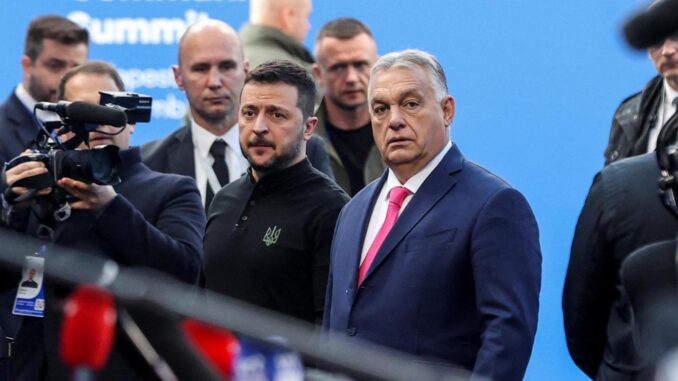
Ukrainian President Volodymyr Zelensky looks on during a visit to a plant of German drone maker Quantum Systems.
Reuters
Threats with the Army
Hours before Sibiga denounced what he described as an act of “state terrorism and extortion”During an open-door meeting with his government, Ukrainian President Volodymyr Zelensky launched an unprecedented threat in the long list of insults and cross-attacks that he has been exchanging with Orbán.
“We hope that person in the EU do not block the 90,000 millionor the first batch of the 90,000 million, and that the Ukrainian military continues to have weapons. If not, we will give that person’s address to our armed forces, to our guys. “Let them call him and talk to him (the armed forces) in his language,” said the Ukrainian president.
Zelensky’s words provoked an immediate response from the Hungarian Government and its European partners from the group Patriots for Europe, who denounced the “physical bullying suggestions” of the kyiv leader and described them as “hardly compatible with Ukraine’s aspiration to enter the EU”.
The Druzhba pipeline crisis
Orbán is vetoing the issuance of debt necessary to finance the 90 billion euro loan agreed to by the Twenty-seven in December, and which seeks to force kyiv to restore the operation of an infrastructure of the Druzhba pipeline – through which Hungary receives oil from Russia – located in its territory, which has stopped working since it was hit by a Russian attack on January 27.
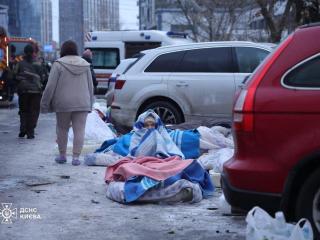
European Commission President Ursula von der Leyen publicly called on Zelensky on February 24 to make the necessary repairs as soon as possible to resume the transit of Russian oil to Hungary.
The Ukrainian president is resisting restarting the section of the pipeline in question, arguing that it is Russia that must answer for the damage caused.
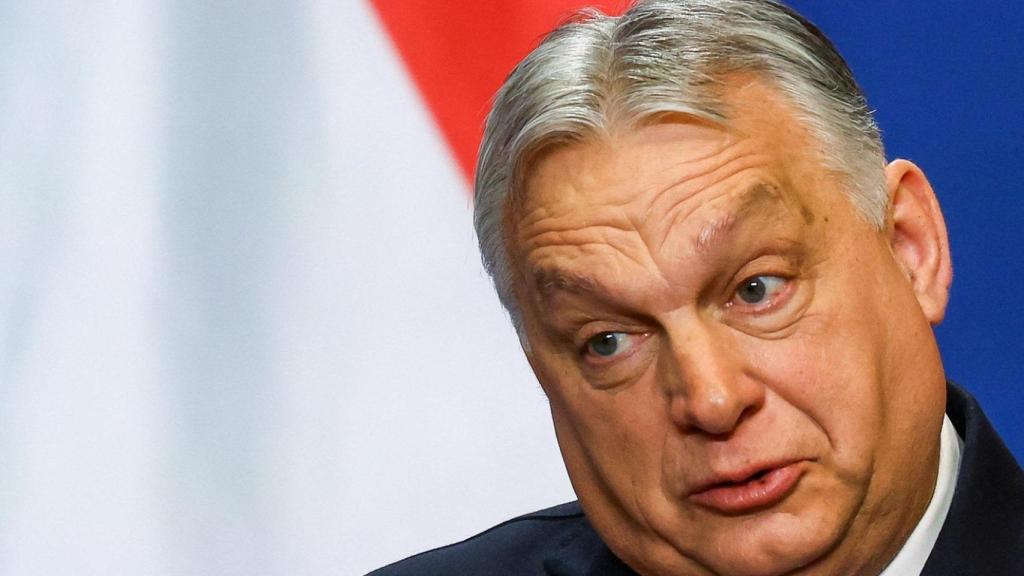
Viktor Orbán, Hungarian Prime Minister during a file photo.
Reuters
Orbán, for his part, assures that the infrastructure is not damaged and can be reactivated immediately if Zelensky gives the order. The Hungarian Prime Minister has asked that Hungarian specialists be allowed to inspect the damaged infrastructure, something that Zelensky refuses, who, according to the Financial Timesnor has it allowed the EU ambassador in kyiv to check the current status of the object of discord.
daily darts
In the midst of this blockade, Zelensky appears every day as the main negative character in Orbán’s election speeches.
Beyond the lively rhetorical war, which on February 14 at the Munich Security Conference led Zelensky to reproach Orbán for is increasing “its belly” more than the capabilities of its Armytwo Ukrainian citizens with Hungarian passports who had been captured by the Russian Army while fighting with kyiv forces ended up benefiting from the propaganda battle between the two capitals.
The Hungarian Foreign Minister, Péter Szijjártó, traveled to Russia this week to take these two prisoners on their plane of war, released in a unilateral Hungarian initiative, which has been perceived in kyiv as a hostile maneuver facilitated by the Kremlin for the electoral benefit of Orbán, who faces general elections on April 12.
Leave a Reply