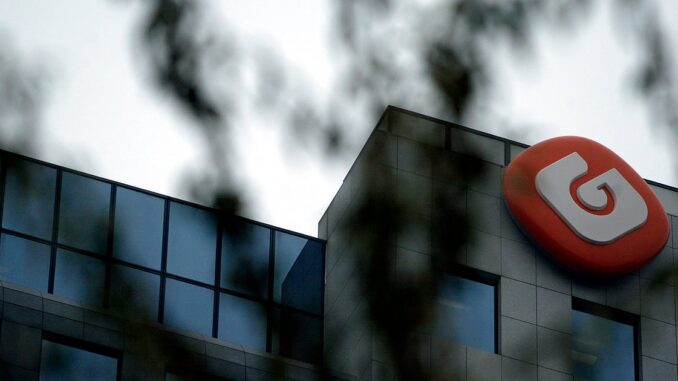
Galp expects to conclude the final agreement with Moeve in mid-2026 to combine the refining and marketing businesses in the Iberian Peninsula, a process that still depends on final negotiations and regulatory authorizations.
“We hope to reach a final agreement in mid-2026”, said this Monday, 2nd, the company’s co-chief executive (co-CEO), João Diogo Marques da Silva, when presenting the 2025 results to analysts, adding that the parties have already reached preliminary understandings, with “further details being discussed”.
According to the manager, the process has not yet entered the regulatory authorization phase, which should include assessments of competition and foreign investment.
The agreement under discussion with the former Cepsa provides for the creation of two separate business platforms: one dedicated to fuel retail and mobility, which will bring together the gas station networks and will be co-controlled by Galp and Moeve, and an industrial platform, focused on refining, petrochemicals, ‘trading’ and low carbon fuels (such as biofuels and hydrogen).
In this industrial platform, Galp will have a minority stake, greater than 20%, while the majority of the capital will be in the hands of the shareholders of the Spanish company Moeve. Among the potentially integrated assets is the Sines refinery, considered strategic for the national energy supply.
During the conference call, co-CEO João Diogo Marques da Silva highlighted that the assets of the two companies are very complementary, benefiting from the integration of logistics chains and retail networks, and pointed out that global studies indicate potential synergies of at least 10%.
“We consider that our assets, both Galp and Moeve, are very complementary”, he stated, adding that the objective is to realize synergies from the first year after the conclusion of the operation.
Galp recorded a record net profit of 1.15 billion euros in 2025, an increase of 20% compared to the previous year.
Performance was driven by oil and gas production in Brazil and the sale of natural gas, despite the decline in oil and the dollar and the scheduled maintenance stoppage at the Sines refinery.
Leave a Reply