With an area 18 times larger than that of Portugal, Iran, attacked this Saturday by Israel and the United States, is a strategic state in the Middle East with vast reserves of gas and oil.
Since the Islamic Revolution of 1979, which ended more than two millennia of monarchy, the country has been led by a clerical power.
Here are five essential points about the Islamic Republic of Iran, in a work by the news agency France-Presse (AFP):
Ethnic diversity
With around 90 million inhabitants, three-quarters of whom live in urban areas, Iran is culturally diverse.
Although the Persians are the majority, the country has significant communities of Azeris, Luros, Kurds, Arabs, Baluchis and Turkmens.
Persian is the official language, coexisting with several regional dialects.
The capital, Tehran, is home to around ten million people.
Muslim majority
Iran is the largest Shiite-majority country in the world, with more than 90% of the population adhering to this branch of Islam.
The Sunni minority is mainly concentrated in the provinces bordering Iraq, Pakistan and Afghanistan.
The Constitution officially recognizes the Christian, Jewish and Zoroastrian minorities (the doctrine of the Persian prophet Zoroaster, or Zarathustra, from the 7th century BC), with representation in parliament, but the Baha’i confession has been banned and persecuted since the Revolution.
Oil and gas
The country holds around 10% of the world’s certified oil reserves and 15% of natural gas.
Despite the wealth in hydrocarbons and a diversified industrial sector (petrochemicals, steel and automobiles), the economy faces serious obstacles due to international sanctions, hyperinflation and devaluation of the national currency.
Strategic location
Located at the crossroads between Europe and Asia, Iran is the second largest country in the Middle East by area, surpassed only by Saudi Arabia.
It controls the northern bank of the Strait of Hormuz, a vital passage for global oil transit.
It borders seven countries, including Turkey, Iraq and Pakistan, and shares the Caspian Sea to the north with nations such as Russia.
Islamic Republic
The political system combines republican institutions with clerical power.
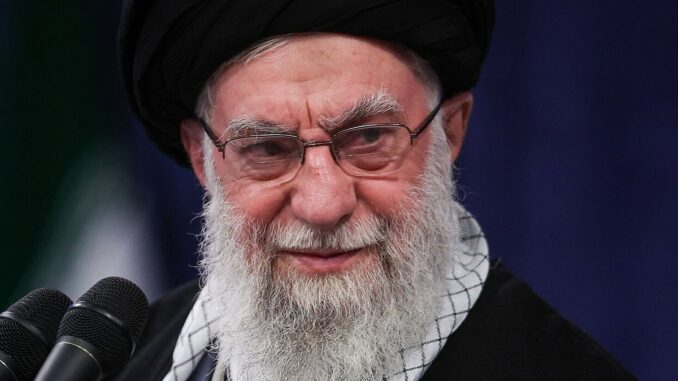
The Supreme Guide, ‘ayatollah’ Ali Khamenei, in office since 1989, is the commander-in-chief of the Armed Forces and has the last word on strategic decisions.
The regime is defended by the Revolutionary Guard, an ideological structure that also controls vast sectors of the economy.
The President, currently Masoud Pezeshkian, is elected every four years, but candidacies depend on the approval of the Council of Guardians.
Leave a Reply