
“The climate is different. And it is no coincidence that, in the last 25 years, in 2001, 2016, 2019 and 2026, we have had exceptional peaks in precipitation”, he stressed.
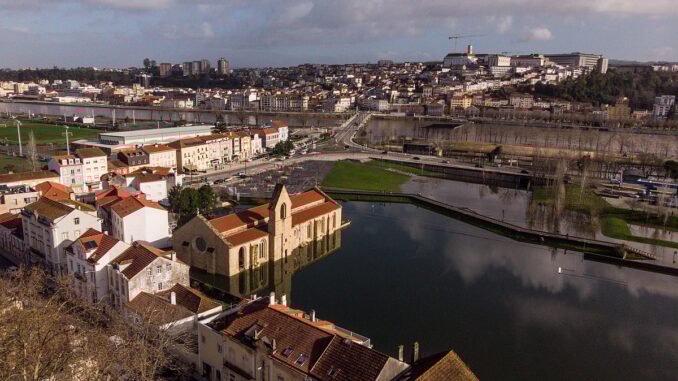
According to Pimenta Machado, in 2001, “the flow reached 1,800 cubic meters” and the dikes burst in 16 places (one of them went to the left side, creating a “more vulnerable situation”, due to the presence of people).
In 2026, the dike burst “to the right side, very close to the same location [de 2001]”, he explained, referring to the need to analyze this situation.
The person in charge also defended the updating of the hydraulic project, “according to the precipitation regime, the hydrological regime and, essentially, making it more resilient and adapted to climate change”.
Speaking to journalists on the sidelines of the session, the president of APA, regarding the siphon near Highway 1 (A1), highlighted the “exceptional fact” that, as a result of the fires, there was a lot of wood burned in the river, adding that it “did not work as expected”.
“What I now ask the scientific community is to evaluate this and understand how such siphons, faced with a completely different situation, can work”, he added.
Several storms have hit mainland Portugal since the end of January, the most violent being Depression Kristin, on January 28th.
The total or partial destruction of homes, businesses and equipment, the fall of trees and structures, the closure of roads, schools and transport services, and the cut of energy, water and communications, floods and floods are the main material consequences of the storm.
Leave a Reply