
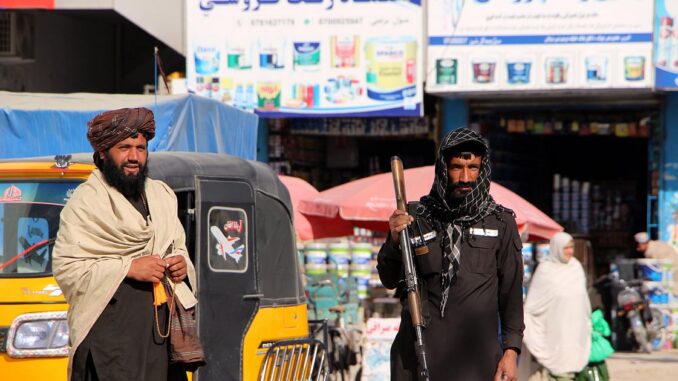
We have become accustomed to considering the Taliban, the masters of Afghanistan, as Pakistan’s allies. And it was like that for a long time. In the first passage of the so-called ‘students of religion’ to power in Kabul, their Islamic fundamentalist regime was only recognized by three countries and one of them was Pakistan. I even visited the embassy they had in Islamabad, at a time when they had already fallen into disgrace for harboring Osama bin Laden and Al-Qaeda. After the September 11 attacks, the United States forced General Pervez Musharraf, then president of Pakistan, to abandon the Taliban. Not entirely.
Pakistani support for the Taliban from the 1990s onwards was the logical follow-up to the support it had given to the mujahideen in the 1980s, when the Soviets and Afghan communists were the enemies of the United States itself.. The end of the Cold War, and the Soviet withdrawal, did not, however, bring peace to Afghanistan. And in power games, the Pakistani military was interested in maintaining useful allies in its western neighbor, to have strategic depth in the event of a war with its eastern neighbor, India. But the Taliban’s protection of bin Laden, who attacked the United States, destroyed this Pakistani strategy. The allies became uncomfortable, even though they did not completely lose their usefulness against the influence of other powers.
This was at the end of 2001. And the Taliban seemed to have been thrown into the dustbin of history anyway. Mullah Omar, its founder, fled his stronghold in Kandahar (he never settled in Kabul, even when he took the city from the former mujahideen in 1996) and later died. But the reconstruction of Afghanistan failed and In 2021, after the withdrawal of American and other troops, the Taliban returned to power. Its leader is now Hibatullah Akhunzada and, despite denying the connection, he is also seen as a protector of the Pakistani Taliban, who just a few days ago carried out a deadly attack on a mosque near Islamabad. Like the Afghan Taliban, the Pakistani Taliban are mainly ethnic Pastunes, who live on both sides of the border.
E what border is this? It is the Durand Line, negotiated in the 19th century by Sir Mortimer Durand, a British diplomat. It separated British India from Afghanistan, a country that had resisted successive invasions and had become a buffer state between the British and Russian Empires. (Russia, and later the Soviet Union, controlled Central Asia). Even after the end of British colonization, with the independence of modern India and Pakistan in 1947, this border remained. And Afghanistan was even the only country to vote against Pakistan’s entry into the UN as a sign of contesting the Durand Line.
So this tension, now war, has ancient causes. It is a rivalry that has roots in the border line negotiated in 1893 with Emir Abdur Rahman Khan and extends over more than 2,500 kilometers.
Pakistani Prime Minister Shehbaz Sharif threatens to crush the enemy and it is certain that his country has one of the most powerful armies in Asia. Afghanistan is not in a position to face Pakistan in a traditional conflict, but The Taliban, on both sides of the border, have vast experience in mixing guerrilla warfare and terrorism. There are two Islamic countries, and we are even in the holy month of Ramadan, but nationalism weighs heavily.
Leave a Reply