
Nemesio Oseguera Cervantesalias ‘El Mencho’ (Michoacán, Mexico, 59 years old) was the most wanted man in his country. He died last Sunday in a joint operation by the Army and the Federal Police. The fight for succession among his lieutenants or for territorial dominance of the Mexican drug lords remains open.
The members of the Jalisco New Generation Cartel (CJNG) have reacted by causing shootings, blocking roads and burning buses in more than 20 states in the country. It’s the usual answer: it’s called ‘narco revenge’, a scorched earth tactic to take revenge on the State and demonstrate its power when one of its own falls.
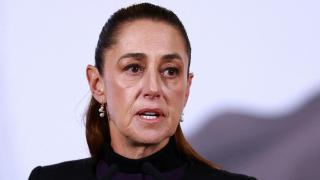
To date, at least 72 deaths have been confirmed, including those resulting from military intervention. The Mexican president Claudia Sheinbaum has activated the ‘code red’: classes have been suspended in various states and police surveillance has been reinforced throughout the territory.
The CJNG has no known successor. Unlike the Sinaloa Cartelwhose two-headed leadership is made up of two families, ‘El Mencho’ governed a structure made up of ‘lieutenants’ with relevant weight in their corresponding function or territory.
This fragmentation resulted from the rapid growth of small regional organizations led by local chiefs. The riots caused these past days in 23 different states they demonstrate the coordination capacity of the troops.
The candidates
According to the Secretariat of National Defense of Mexico (SEDENA), the name that most sounds like to replace the dejected boss is that of Gonzalo Mendoza Gaytán, alias ‘El Sapo’ (Michoacán, Mexico, 37 years old). He has been plaza manager in Puerto Vallarta. He is credited with the leadership of Immediate Action Group and has the support of ‘El Mencho’s’ family.
Furthermore, there is talk of Audias Flores, alias ‘The Gardener’ (Michoacán, Mexico, 45 years old). Also known as ‘The Audi. He was the head of security for ‘El Mencho’ and controlled the most important regions of the clan: Jalisco, Nayarit, Zacatecas, Guerrero and Michoacán. ‘El Jardinero’ has been responsible for controlling the routes to the United States.
Another of the leaders in dispute is Ricardo Ruiz Velasco, alias ‘El Double R’ (Guadalajara, Mexico, 41 years old), responsible for cartel operations and to whom multiple impact murders are attributed. Among them, police, officials and, more recently, the Venezuelan model Daisy Ferrer24 years old and the Mexican influencer Valeria Marquez23 years old.
Specialists in the Jalisco Cartel explain that the organization operates under a decentralized scheme and cite other candidates, such as Juan Carlos Valenciastepson of the fallen boss,Julio Castillo ‘El Chorro’son-in-law of ‘El Mencho’, or Heraclio Guerrero, ‘Uncle Lako’.
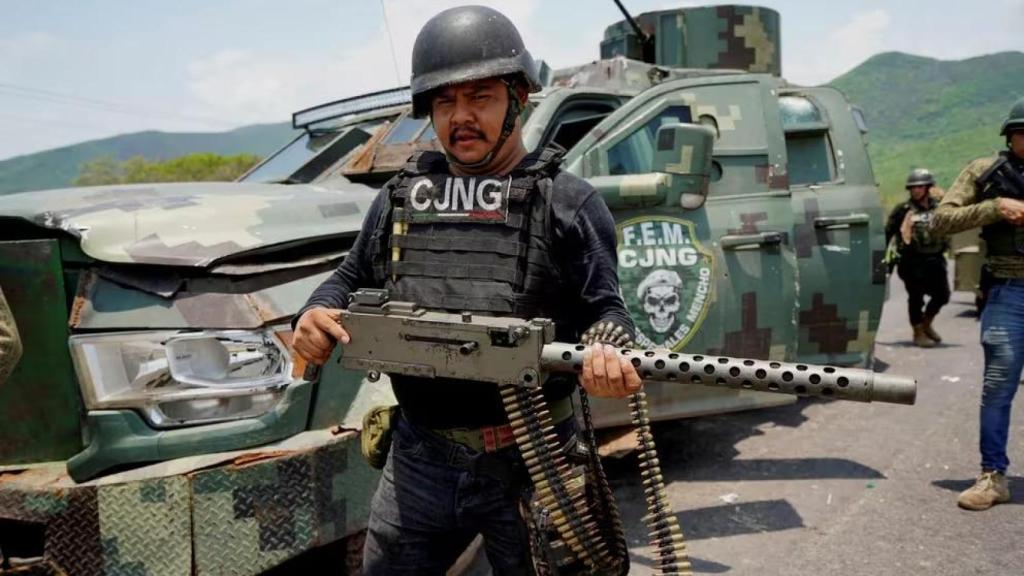
For the moment, it seems that the group will continue with collegial leadership, but it is not ruled out that a phase of internal fragmentation is approaching. Experts point out that the succession processes in this type of organizations usually go accompanied by strategic rearrangements. It is not uncommon for adjustments to occur as a result of very violent episodes.
The CJNG empire has extended its presence in more than 40 countries. The Mexican media Milenio points out that the DEA (Drug Control Administration) defines the Jalisco organization as one of the “largest criminal enterprises in trafficking methamphetamine and fentanyl“.
The most difficult thing in the drug business is to establish access routes to markets. This means that control of the cartel is coveted not only by its lieutenants, but also by rival groups.
Many see the fall of the Jalisco boss as an opportunity for other cartels to recover some of the lost ground. ‘El Mencho’ was determined to control Michoacán, his native province, where he had faced small local gangs organized around the United Cartels organization.
Rival cartels
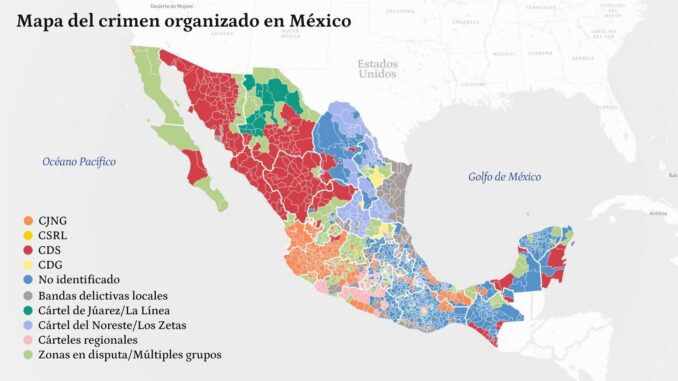
The most serious rival is Sinaloa Cartelwith strong dominance in the north of the country. Sinaloa dominates the US border, with the exception of the state of Chihuahua, controlled by Juárez. Both organizations were involved in the bloodiest episodes of the wars between rival groups for control of the passes to Texas and New Mexico.
After the capture of ‘El Chapo’ Guzmán, the leadership of the Sinaloa Cartel was divided between the two ruling families. The war intensified after the arrest of the head of one of the sides, capo Ismael Zambada, ‘El Mayo’. The balance between the gangs was broken and violence between the rival groups soared.
Despite the internal struggle, the Sinaloa Cartel continues to be, along with the Jalisco Cartel, one of the main security threats due to its dominant role in fentanyl trafficking to the United States. There is no doubt that the loss of ‘El Mencho’ opens an opportunity for his rivals.
In addition to the aforementioned Jalisco, Sinaloa and Juárez cartels, there are three other important groups in Mexico: the Noroeste Cartel, the Gulf Cartel and the Michoacana Family, in addition to a plethora of local gangs around the Mexican capital.
Recent history demonstrates the failure of the policies drawn up by successive governments against the all-powerful drug trafficking gangs. Misión Verdad, a Venezuelan journalistic investigation and communication group, published a study last October that estimates 380,000 “intentional homicides” accumulated between 2006 and 2023″. Most related to drug trafficking.
Wars between cartels keep Mexico among the nations with the highest homicide rates in the world. These are conflicts that primarily affect criminal factions, but it is common for civilians and members of the security forces to accidentally find themselves caught in the crossfire.
Leave a Reply