
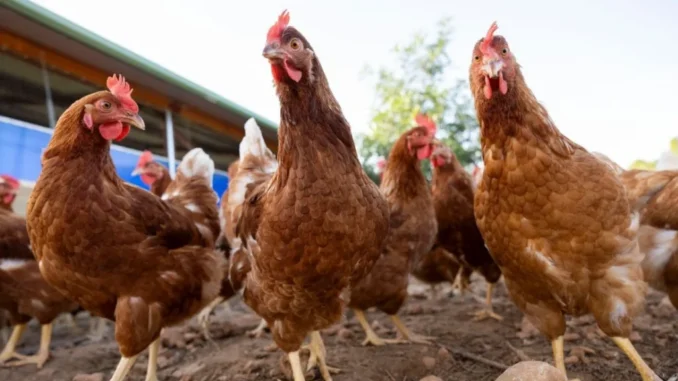
animal health authorities Argentina detected an outbreak of bird flu in an establishment in Buenos Airesso since this Tuesday exports from the sector were temporarily suspended.
This was reported by the Animal Health Service (Senasa) after confirming on Monday a case of highly pathogenic avian influenza (HPAI) H5 in poultry in the town of Ranches120 kilometers southwest of the Argentine capital.
The discovery launched a contingency plan with isolation, disinfection and sacrifice of the birds, whose number was not reported.
The government notified the case World Organization for Animal Health (OMSA) and temporarily suspended exports of all poultry products to countries with which it has an agreement under disease-free status.
You may also be interested in: Inflation in Mexico rises again and stands at 3.92%
Domestic market production will continue normally
However, production destined for the domestic market will continue normally since avian influenza is not transmitted by consumption of poultry meat or eggs, said the Senasa.
The last outbreak had occurred last August in another commercial establishment in the province of Buenos Aires, which had led to the suspension of exports, which resumed in October.
Argentina registered an 8% year-on-year increase in poultry meat exports in the last period (January-August 2025) with a volume of 112,000 tons that generated 155 million dollarsaccording to official data.
The main export destinations of the sector are China, South Africa, Chile y Hong Kong.
in the neighbor Uruguayhe Ministry of Livestock, Agriculture and Fisheries (MGAP) declared a health emergency this Tuesday after detecting H5 avian influenza in wildlife in Cannelloni, Maldonado y Rochain the south and east of the country.
You may also be interested in: Sheinbaum celebrates the sale of 24% of Banamex to various shareholders
They seek to curb risks from bird flu outbreaks
The emergency declaration, which seeks to reduce the risk of spread to poultry production, prohibits the mobility of poultry and the installation of fairs, auctions and exhibitions related to the sector throughout the country.
It also reinforces biosecurity instructions, which include greater controls and increased protection in pens to avoid contact of production with wild birds.
He virus H5N1 It continues to circulate intensely in 2026 and greatly affects poultry farming and has jumped to cows, but there is no human pandemic or sustained person-to-person transmission.
Leave a Reply