
One of the big bets is improving communications in an emergency scenario, which have often failed in the face of extreme weather phenomena. The PTRR document released this Friday at the Council of Ministers meeting contains measures that could have a major impact. The ‘Connected Parishes’ measure, for example, provides that “each of the 3,258 parish councils will receive 1 SIRESP telephone, 1 satellite telephone, 1 Starlink data connection”, the company owned by businessman Elon Musk. If it comes to fruition, it will be a revolution in the ability to communicate in times of crisis.
Still in this chapter, the Government considers the “review of technical standards and the requirement for operator continuity plans, progressive line burial solutions, definition of geographic redundancy corridors for fiber optic “backbones” and sharing of infrastructure between operators. The Government also foresees a “solution for the Future of SIRESP, considering the independent study (completed in February 2026)”.
Mandatory earthquake stress test
The Prime Minister confirmed that the Government is evaluating the creation of a national disaster fund to face severe storms or earthquakes, as the Minister of Finance had already admitted. Also in the field of seismic risks, the head of Government announced the review and update of national legislation relating to resilience and seismic reinforcement, with a wide range of measures. One of the new features is “to establish a periodic and mandatory National Stress Test for the Energy System, with simulation of extreme scenarios (climatic, cyber, geopolitical and electrotechnical stability), the results of which inform network planning and risk mitigation plans”.
All these measures must occur in parallel with the “essential reforms” of the Civil Protection and INEM structure, in line with what had already been announced by the Prime Minister.
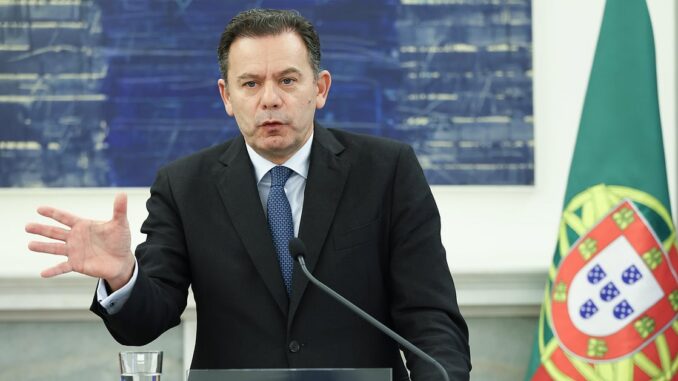
Luís Montenegro scheduled the PTRR’s objectives in three phases. Initially, in the short term – what he called recovery -, until the end of 2026, the actions are aimed at solving the problems of people and companies. The second phase of measures, which he called resilience, extends until the 2029 legislative ones and the ‘transformation’ ones go beyond the legislature, coinciding with the European Union’s next multi-annual financial framework.
Stressing several times that this program is not the same as the PRR, Montenegro said that it will be aimed at the entire country, not only to help the areas most affected by storms, especially Storm Kristin, but aims to increase the country’s resilience to future extreme weather phenomena.
Against the backdrop of global damage estimated at around 4.5 billion euros, the Government admits that the PTRR may have different sources of financing, in addition to community funds. Luís Montenegro admitted the possibility of turning to the markets for new debts, because, he said, the country can now use credit at favorable interest rates.
The prime minister also said that some of the measures under consideration will require parliamentary approval, therefore appealing to the “patriotic sense and responsibility of all political agents”.
Leave a Reply