
Between the closing of the Foro Economico Mundial de Davos 2026, Balance is a clear and relevant diagnosis for our continent. The latest McKinsey report, “Transforming Europe: Bold steps to lift the continent”, revealed that Europe faces a €1.2 billion annual turnover to restore its competitiveness.
We are talking about an ambitious target (50% higher than previously estimated by the informed Draghi) and admit that the diagnostic period is over and that without a coup de timón we could risk falling into secular stagnation with a PIB increase of only 1%.
In this context, we need it “bold moves” and the sectors they lead. And here, in the midst of this quest for strategic autonomy, from where we must strive to see where Europe is leading us.
There is an industry that does not need promises for the future because it meets the needs of the present. That’s the beauty industry.
Our sector represents exactly this strong industry, exporter and innovator that McKinsey cites as a reference. We welcome the giant that brings €180,000 million to the EU’s GDPwhich is a figure corresponding to the combined economy of Croatia, Slovenia and Estonia.
It is no coincidence that Europe is the region leading global cosmetic innovation
Despite the breaches affecting other sectors, Europe maintains undisputed hegemony as we are the world’s leading exporter of cosmetics and home to 5 of the world’s 7 largest companies.
This commercial outcome responds to a structural urgency that also overcame the debates in Switzerland: Europe’s need to escape the “footprint of media technology”. While the experts will warn you about it the continent has lost ground in the digital consumer revolution, Our industry shows that Europe is capable of leading the next great world where biotechnology, artificial intelligence and sustainability converge.
It is no coincidence that Europe is the region that leads global cosmetic innovation, the intellectual activity that transforms raw materials into products with high added value and protects our industrial sovereignty in the face of delocalization.
If we seek more, Spain is the largest representative of this result, proving that competitive reindustrialization is possible. Our country has established itself as a global power, achieving the position of being the second world exporter of perfumes in many sectors that are the symbol of our “España brand”, such as wine, shoes or olive oil, following our information on the essence of beauty that we presented It’s been a month.
The numbers are round: in 2024, our exports will reach record highs and reach 9,589 million euros, an increase of 23%. As the national economy grows, consumption in our sector was double (+7.7%), highlighting resilience at the start of cycles.
In Spain, the cosmetics sector supports more than 300,000 employees and we are at the forefront of social change
This leadership is mainly the result of inversion. Exactly the recipe that Europe needs. At L’Oréal Groupe, innovation has always been part of our ADNIt is the engine that drives our growth and the key to maintaining our competitiveness in a more challenging global environment. We understand that the beauty of the future is primarily technological.
This is why we are the company that sends the most to R&D in the sector: more than 1,300 million euros in 2024, with an army of 4,000 investigators and 8,000 technology and AI experts worldwide. This product translates into real industrial capacity also in our country with our international capillary products factory in Burgos.
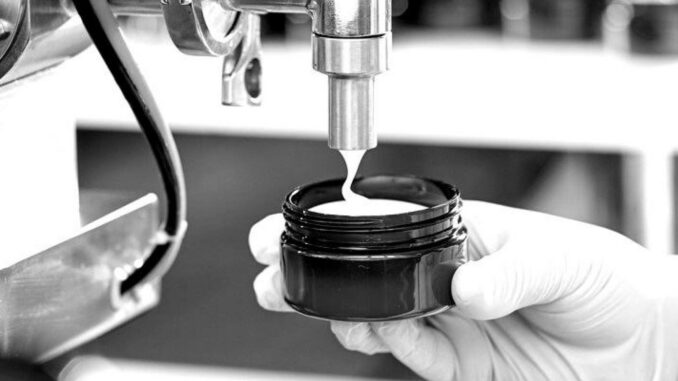
The Burgos Plan is a real example of this “industrial autonomy” that we love From there, we produce a million products a day and export 92% to more than 50 countries.
And we have done it by showing that economic competitiveness and environmental excellence are an inseparable combination and that our factory has been carbon neutral since 2015 and is a world pioneer as a “Waterloop” factory that recycles 100% of water in its processes.
Finally, European competitiveness cannot be understood without human capital. In a continent worried about its workforce, our sector supports 3.2 million workers in Europe, more than for air transport.
In Spain, the cosmetic sector has more than 300,000 employees and we are at the forefront of social change: 56.6% of senior positions in our sector are occupied by women, breaking glass technologies that remain in other sectors.
We keep the final model at home. The cosmetics industry offers a road map through cutting-edge science, sustainable factories connected to the world and an unrelenting export mission. If Europe is looking for a future, beauty shows it the way.
***Juan Alonso de Lomas, CEO of L’Oréal Groupe para España y Portugal.
Leave a Reply