
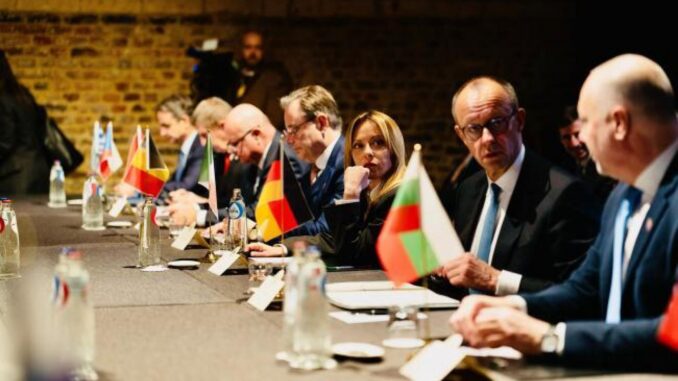
New episode of isolation Pedro Sanchez on the European scene. The President of the Government has been left out of the economic mini-summit organized this Thursday by Germany, Italy and Belgium, a prelude to the informal meeting of heads of State and Government held at Alden Biesen Castle.
The president of the European Council, Antonio Costahas called for the retirement of Alden Biesen to debate the urgent measures that the EU must adopt to strengthen its competitiveness and not continue losing ground to the United States and China
At the previous mini-summit organized by the German Friedrich Merz, the Italian Giorgia Meloni and the Belgian Bart de Wever, the president of the Commission participated, Ursula von der Leyenand a total of 19 countries, including all the great European powers except Spain.
In addition to the three organizers, the leaders of France, Poland, the Netherlands, Austria, Bulgaria, Cyprus, Croatia, Denmark, Finland, France, Greece, Luxembourg, Czech Republic, Romania, Slovakia, Sweden and Hungary attended the mini-summit.
Even the French president, Emmanuel Macronwhich maintains antagonistic positions with Germany and Italy on economic matters, has decided to join the mini-summit despite not being on the organizing committee.
Moncloa has avoided explaining the reasons for Sánchez’s absence. Unlike most leaders, the president of the Government He also did not want to stop and talk to the press upon his arrival at Alden Biesen Castle.
As reported by the Italian Government, the mini-summit served as the inaugural meeting of a new informal working group dedicated to European competitiveness issues.
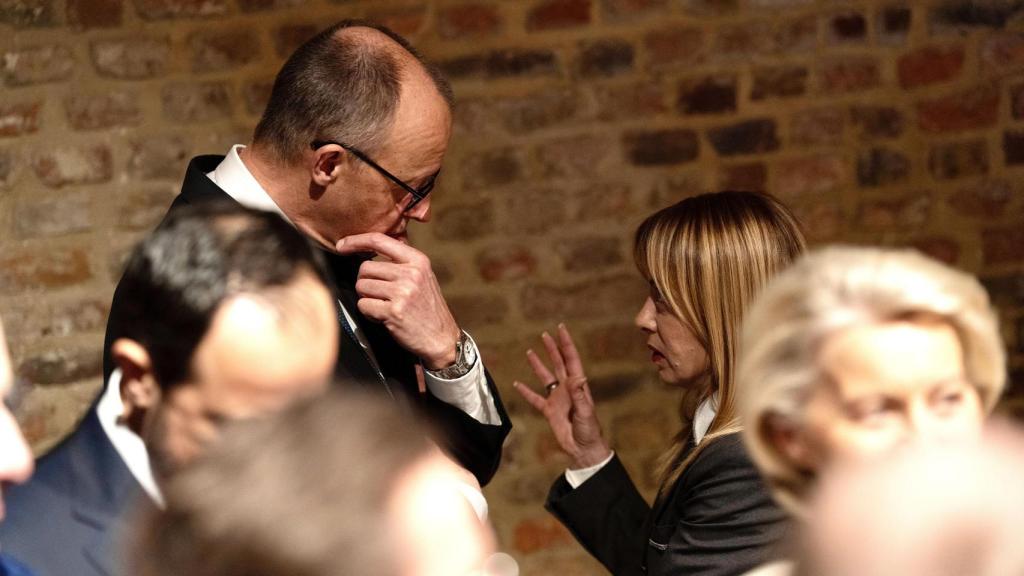
Giorgia Meloni and Friedrich Merz talk during the mini-summit this Thursday
The leaders’ debate has focused on the three priorities defined in the discussion document prepared by Italy, Germany and Belgium: the completion of the single market; regulatory simplification and reduction in energy prices; and an “ambitious and pragmatic” trade policy.
The Heads of State and Government have spoken in particular of the most urgent measures to “relaunch European industry”, starting with the review of carbon pricing mechanisms (both the emissions trading system and the border carbon tax).
The participants in the mini-summit have committed to ensuring a “prompt and faithful follow-up” of the political priorities in economic matters set by the European Council.
The leaders have agreed to hold a second meeting before the European Council at the end of March in order to “keep high attention on competitiveness issues and contribute to the definition of concrete objectives and precise deadlines.”
Pressured by its internal problems and the controversy that its migrant regularization policy has unleashed in the EU, Sánchezhas barely participated in the previous debates at the Alden Biesen meeting, and, unlike other partners, has not provided any documents of its own.
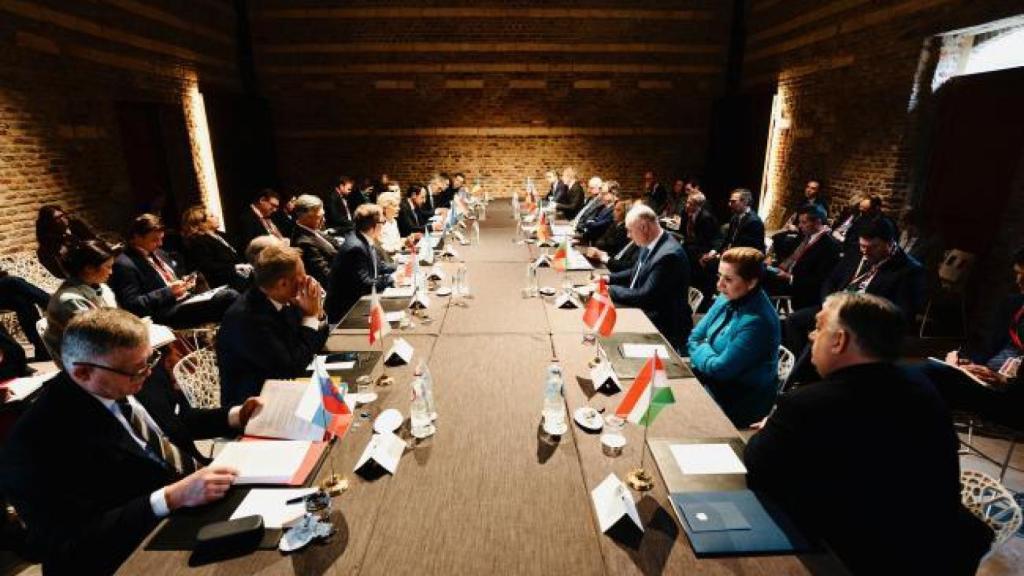
The table of the previous mini-summit organized by Italy, Germany and Belgium that Sánchez has not attended
During his first term, the President of the Government carved out a leading profile in Brussels and played a leading role in carrying out initiatives such as the Next Generation funds or the ‘Iberian exception’ in terms of electricity.
However, Sánchez has recently neglected his European profile, which has led to growing isolation in debates such as aid to Ukraine or immigration policy.
He turning point was the NATO summit in The Haguewhere the President of the Government signed the commitment to increase Defense spending to 5%, but then announced that he would not comply, which caused general indignation among his European allies.
As explained by sources from Moncloa, Sánchez defended the idea of European preference as a mechanism to protect the community industry, particularly in strategic sectors such as low-carbon steel made in Spain.
The Government also supports the establishment of conditions for productive foreign investment in key sectors to guarantee quality employment, integration into local value chains and transfer of knowledge and technology.
The president has sided with Macron – and against Merz and Meloni – in defending a new issuance of joint European debt for strategic sectors. Finally, Sánchez is in favor of moving forward in a Europe at various speeds in those areas where an agreement at 27 is not possible.
Leave a Reply