
The keys
nuevo
Generated with AI
nuevo
Generated with AI
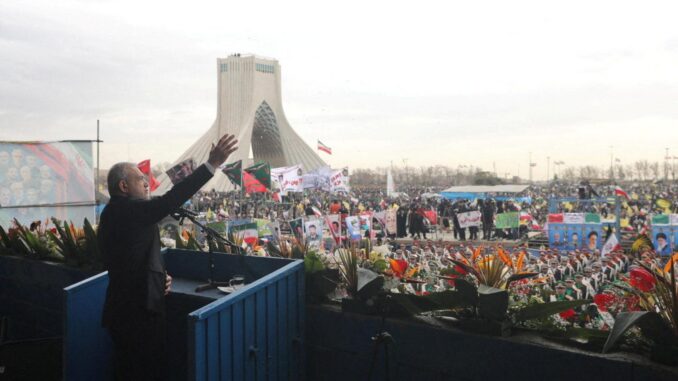
The Ayatollah regime celebrated this Wednesday the 47th anniversary of the Islamic revolution that overthrew the Shah Mohammad Reza Pahlavi. The national holiday was about to coincide with the wave of protests that put the Islamic Republic on the ropes, which only dissipated the mobilizations by launching a brutal campaign of repression.
Many protesters called for the return of the monarchy and its heir. In an escalation of repression following the January protests, Iranian authorities have detained key figures of the Reform Front in recent days.
The arrest of the leader of the Front has been confirmed, Azar Mansouri and at least four other dissident leaders. Among them, the former vice minister of Foreign Affairs, Ebrahim Asgharzadeh. The arrests are linked to a reformist statement from January that called for the resignation of the ayatollah Ali Jamenei and a transition council.
Authorities accuse them of “destabilizing the country” amid threats from the United States and Israel, and of coordinating with enemy propaganda.
Iran has been in tension for weeks due to threats of military intervention by the United States if a nuclear agreement is not closed, warnings that have accompanied the deployment of the USS Abraham Lincoln aircraft carrier to the Gulf along with its support group and are now considering sending another.
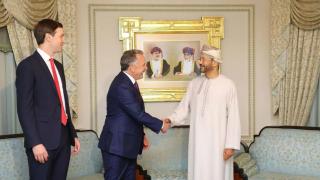
The national holiday also coincides with negotiations with the United States in Oman to discuss the evolution of the Iranian nuclear program.
“Death to the dictator”
The celebrations began at nine o’clock on Tuesday night, when fireworks illuminated the night of the Iranian capital. The Western witnesses present at the events could hear the cries of “God is the greatest”, although the explosion of the rockets did not manage to silence the cries of “death to the dictator” that emerged from inside the houses.
The Iranian president Masud Pezeshkian He reiterated in a speech in Azadi Square that his country does not seek nuclear weapons and assured that it is ready for “any verification” of its atomic program.
Pezeshkian called for national unity after the “wound” of the protests that caused “great pain” and apologized to the population for the problems facing the country. “Unfortunately, the events of January 8 and 9 caused great pain in our country and led our beloved people to death and martyrdom,” he declared.
The Iranian Government acknowledges the death of 3,117 people in protests for which it blames the United States and Israel, but the NGO HRA, based in the United States, places the death toll at 6,984, although it continues to verify more than 11,600 possible deaths, and estimates some 51,000 arrests.
Leave a Reply