
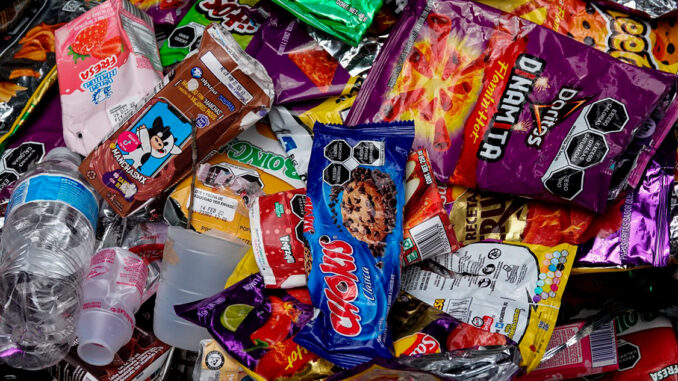
Today’s generations of children, teenagers and young adults are facing an environment that worries about their mental and physical health, an environment built under salvation capitalism where corporations come to build their power over their health and sacrifice it.
It is common for CEOs and officials of global corporations to avoid having their families and their children consume what they produce and market. It is clear that the rest of the families, children and teenagers consume their products, but not their families, not their children, not their hijja.
This practice is so wide and deep that it is harming the mental and physical health of generations on a global scale. As an example, it is enough to point out the following: 1. the recognized influence of social networks, algorithms, video games, digital pornography, created as addictive, on the effect on the cognitive development and mental health of children, adolescents and adolescents. And 2. the impact on the physical health of children, adolescents and young adults is the consumption of ultra-processed foods, cigarettes and unhealthy drinks, the main cause of the global epidemic of overweight, obesity and diabetes.
In Silicon Valley, some of the most important advances in digital technology, CEOs and employees of corporations such as Google, Apple, Meta, Amazon, Microsoft, Nvidia, Tesla, etc. limit their children’s use of electronic devices and send them to schools where they do not use these devices. They know very well the educational problem they create, the behavioral and cognitive problems associated with their use, the anxiety they develop, their impact on mental health. Protect your children from the effects of panels while working to develop algorithms to be more effective with children, teenagers and teens, while offering educational institutions the opportunity to use their products with students at a young age. They do everything they can to get other kids, teenagers and young adults to use them and spend more hours in front of the windows, while protecting their children by sending them to schools like Waldrof where they are prohibited from using them.
Over several years, journalist and investigator Michael Moss interviewed executives of large, ultra-processed corporations, bottled and bottled beverages, what we like to call coffee and snacks. Moss sought out these people thanks to his credentials, recognized by several prizes, including the Pulitzer, and as a journalist New York Times y el The Washington Postamong other important media in the United States. Moss documents these suggestions in his classic book “Salt, Azúcar, Grasa. I quote him: “On a personal level, I have met many executives with those who avoided their own products. I can’t resist asking them about their eating habits: John Ruff of Kraft, who rejected sugary drinks and fatty snacks; Luis Cantararell of Nestlé; who likes fish for dinner; Bob Lin of Frito-Lay (Sabritas en México), who avoids fried potatoes at all costs. refreshment that refuses to drink them.” In all cases I found that they did not consume what they produced.
Your products with an excess of blue, spices, fats, salt and artificial additives for taste, color, aroma and texture are not available on your table. But they look for what they are in everyday foods, looking, as Moss demonstrates, for what’s hyper-delicious, what’s addictive.
In the same way, algorithms track and identify red users’ vulnerabilities. Platforms claim to keep stable minimum days for their users, without embargo, have algorithms to identify them and offer attractive products for their days, design games for children with constant stimulation so that they cannot stop.
What unites networks and digital platforms with the chat industry and embossed endulized drinks, what they have in common and what characterizes its success, its degree of penetration, its strategies of engagement, creation of additions. These products, in addition to their differences, are designed to induce the release of dopamine in the brain, in the reward center, the release of the so-called placer hormone. Oh the same thing where drugs are addictive, addictive, oh, if the design of a video game is controlled, it’s called scrolling designed by an algorithm for each person, as well as convenient chat, drinks. The result is, in one case, a distraction, a weakening of reasoning and concentration, an increase in anxiety like an epidemic in children, adolescents and adolescents; and on the other hand, the compulsive consumption of chatarra and endless drinks, which lead to overweight, obesity and, over the years, diabetes, kidney and cardiovascular diseases.
The panorama is not pleasant, but we have hopes and we are bound to such an extreme that the reality cannot be disguised, that the evidence is obtuse. There are initiatives that should be passed into law to legalize and save these products, at least in the area of little girls, teenagers and adolescents, as well as the ban on red wines in this part of the population, as well as the ban on chatarra and endulized drinks filled with them. schools, as well as a public ban on childhood.
The internet is starting to be banned for under 16s in various countries such as Australia, Spain, Denmark; The European Union is discussing a general regulation on whether effective mechanisms are necessary to prevent the entry of minors and whether fines can be imposed for non-compliance. Educational institutions in various countries ban the use of mobile phones and many have stopped encouraging the use of electronic devices. The evidence of these harms is so alarming and worrying that it has led the World Health Organization to recognize that there is an overuse of social resources in children, adolescents and young adults that can affect mental health, sleep, self-esteem and social life.
Regarding comfort food and bottled carbonated drinks, policies to reduce consumption and protect children have progressed around the world, although still very flawed, as we see with Coca Cola’s invasive campaign with the World Cup in our country. How is it possible that a product of this nature is the patron of a sporting event. In a large number of countries, these products are banned in schools, such as Mexico, Chile, Brazil, Colombia, Great Britain, France and others. Advertising is also regulated in very prime hours on television as in the UK, Chile, Norway; the use of personalities or celebrities to announce them is prohibited, as in Mexico; about publicity in physical spaces, like in Portugal as a teacher in schools, among many different ways to reduce its impact. Other medicines have to increase impuestos into embossed drinks. According to the WHO, these beverages have been introduced in more than 116 countries and territories in the Americas as well as Europe, the Middle East, Africa, Asia and Oceania. And finally, advertising labels informing consumers if they are established in Mexico, Chile, Peru, Uruguay, Colombia, Ecuador, Canada and Brazil, among others.
The economic power of corporations has been imposed to adapt to these conditions that harm the mental and physical health of children, adolescents and adolescents, despite the cluster of civil society, academics with science in their hands and officials compromised with the public welfare, mark the difference. Amidst the umbral difficulties we face, there seems to be a need for greater clarity regarding citizen power and its mission, as well as the criminal nature of these corporate practices.
Leave a Reply