
More than two hundred artists signed a letter addressed to the Minister of Culture, Youth and Sports, Margarida Balseiro Lopes, demonstrating against the removal of the Ellipse Collection from the MAC/CCB’s jurisdiction. This collection, which belonged to banker João Rendeiro and which the Portuguese State purchased at the end of 2022, has been managed by MAC/CCB since the creation of the Museum, in 2023, which has it in storage, despite having been incorporated into the State’s Contemporary Art Collection (CACE) in November of that year.
The letter was sent to the Government before the protocol was signed between Museus e Monumentos de Portugal (MMP) and the Fundação Centro Cultural de Belém, on February 2nd, a protocol that “legally clarifies the lending regime between the managing state entity and the Fundação do Centro Cultural de Belém”, the document reads.
Thus, the protocol establishes a lending regime for 50 works for permanent exhibition at MAC/CCB for five years, and a further 200 works for annual programming, with MAC/CCB having priority over requests from other museums and entities.
In practice, MAC/CCB loses autonomy in the management of the Ellipse Collection, since “it must obtain authorization from CACE, in advance, regarding loan requests or circulation projects”, the protocol reads. “CACE undertakes to issue the necessary authorization in a timely manner.” The two institutions, it also reads, should “avoid calendar overlaps or logistical conflicts”.
When contacted, MMP tells DN that MCB/CCB is not diminished by this agreement. “This protocol was signed exactly in the context of the centrality of MAC/CCB and its mission. The text of the protocol is quite clear in this regard”says the entity that oversees CACE.
MMP also emphasizes “that the integration of the Ellipse collection into CACE was of fundamental importance not only in strengthening CACE’s collection, but also – and above all – in its international dimension and projection”.
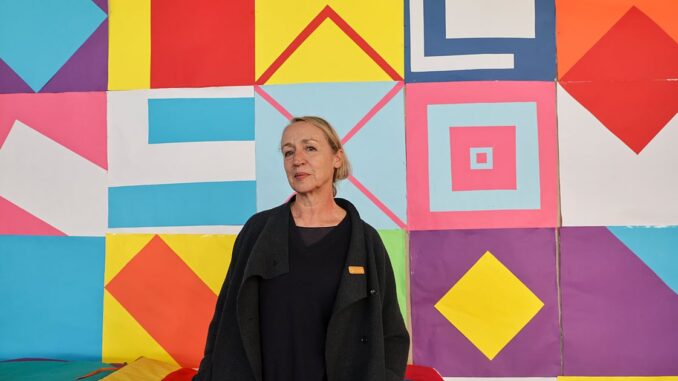
The artist Fernanda Fragateiro was one of the promoters and subscribers of the letter sent to the Minister of Culture on January 28thand which is signed by other artists, such as Pedro Cabrita Reis, Rui Chafes, Carlos Bunga or Vhils, as well as programmers and curators, such as Delfim Sardo (former CCB administrator), Bruno Marchand (Culturgest) or Isabel Carlos (Pavilhão Julião Sarmento), and academics such as Mariana Pinto dos Santos and Catarina Rosendo, gallerists such as Pedro Cera and Vera Cortês, and even collectors, such as Armando Martins, founder of MACAM.
To DN, Fernanda Fragateiro, considers that this protocol represents “a kind of amputation” of the MAC/CCB, as “a museum needs to have assets that are in its hands to have relevance and capacity for action”.
Taking into account that MAC/CCB will continue to have privileged access to the Ellipse Collection, what are the fears of those who signed the letter sent to the Minister of Culture?
If we imagine that a museum is a bank, a museum needs to have assets that are in its hands to have relevance and capacity for action, which is what we expected. And assets are your collections. And this collection, which everyone believed would continue to be under the jurisdiction of the CCB, is no longer. So it’s a kind of amputation. There is a new museum that is born with certain assumptions and then, right at the beginning of the journey, things go backwards. How do you plan in the long term without having a complete collection? Because that collection also has value as a whole, doesn’t it? What do you gain by removing from the Collection an institution that has a team, that has a history, that has international relations, which are things that take years to build? And, above all, when we talk about internationalization, what is internationalization? It’s not about taking exhibitions of Portuguese artists to embassies and less relevant spaces. It means being on the same level as great museums in other countries. And, to do this, you need to have strength, assets, good collections, good works, you need to have an excellent program, you need to know what you are counting on.
Do you consider that limiting loans to 250 works per year for a collection that has more than 800 will have an impact later on the MAC/CCB programming?
On the one hand, this. But the world of contemporary art is very specific, there are rules, there are ways of acting, it has its own language and, often, people who are in politics have no idea, they don’t know what this world is, just as they don’t know what the world of mathematics is, which are very specific worlds. A museum, to function as a national museum, an important museum, has to have good material, it has to have good collections, it has to be agile, it has to have good management, it has to have a policy for the museum, it has to have a strategy. A museum is created with an idea, with an expectation, and after all it is no longer this, now it is something else, now we are going to create another center.
Does CACE-CENTRO, in your opinion, not bring added value to the panorama of contemporary art in Portugal?
CACE was not a center, CACE is a State art collection, which already has an old collection, which comes from several institutions that have changed over time, and which from 2019 has a new strategy, which is to have a commission for the acquisition of works of contemporary Portuguese art. In fact, I was part of this committee for the last two years. This committee works, it has its role, it held its exhibitions, managed this collection, managed purchases, I don’t understand why we are going to have another center without a team, without worthy facilities. We cannot compare the facilities of the Ellipse Foundation, which was a private foundation, which had a space to store this collection, which was opened from time to time to the public, we cannot compare this with the Contemporary Art Museum of the Centro Cultural de Belém, which is a central museum in Portugal, along with the Serralves Foundation. Now are we going to open another center? When there are very few means? The Chiado Museum does not have the funds to hold exhibitions, to make acquisitions, the Belém Cultural Center has its limitations at this level, and now we are going to create another center?
Fernanda Fragateiro was one of the promoters of the letter. Why did they decide to mobilize?
It was a group of artists. We were in disbelief, we weren’t expecting it. It was a completely spontaneous movement of people who started calling each other and saying, we have to have a voice, we can’t be silent. And what we did was write a very nice letter to the Minister, saying that we are concerned about this situation, that we are available for a conversation and we would like this not to happen, we would like this protocol not to move forward without there being a discussion and sharing with the artistic community.
The Museum and Monuments of Portugal says that the integration of the Ellipse collection into CACE will be of fundamental importance not only for strengthening the State’s own collection, but also for its international projection.
Good luck, good luck working on this international collection. It’s just that they are people who have no idea. There are many artists in Portugal who have an international practice and show their work in institutions outside of Portugal. We are the ones doing internationalization, not the Portuguese State. I think the State normally thinks that internationalizing means showing works at embassies.
Should there be more support for artists to go international?
Give scholarships to people to go study, to go to the world, to explore. You don’t want to always spend money on spaces and exhibitions that are parallel to what already exists. We already have a lot of institutions that just need the means to continue functioning well.
Is Fernanda Fragateiro part of AAVP – Association of Visual Artists in Portugal? Will new elections be scheduled because of the leadership’s position in favor of this protocol?
Yes, I have been linked to AAVP since the beginning and I think it is very important to have an association for the visual arts, it was an association that took a lot of work to create and, above all, many artists have worked hard in this association. Unfortunately, there was a position taken by the recently elected management of three people who decided to sign a letter in which they took a very clear position in defense of the signing of this protocol without having consulted the members of the association and the rest of the association’s management. And, obviously, the management lost the trust of the associates.
And will Fernanda Fragateiro present a list?
No, I will not present a list. As an artist, I am really defending museums, defending artists. I’ve been there for many years, I’m already very tired. Ministers are always changing, cultural policies are always changing and you never really make progress, you never manage to get anywhere. And we have very good Portuguese artists, we have an incredible panorama in Portuguese arts, in visual arts, which is not taken advantage of – on the contrary – by political power. We started with the almost dismantling of the Ministry of Culture, which stopped being just the Ministry of Culture and started dealing with other matters, as if culture really didn’t deserve a ministry. And then it is these actions that then have consequences.
What needs to be done?
Take care of the institutions that already exist, that have work done, that have already shown a lot of work, that have already shown that they are solid and that have very few means to continue operating. That’s all it takes, to take care of, take care of what we already have.
Would you still like to be received by the Minister of Culture, despite the protocol already being signed?
Only death is irreversible… The media itself also has very little information on these issues of the arts, of contemporary art, because it is, in fact, a very specific medium. It is not always easy for people to understand what is at stake. It may seem almost like a tantrum, but no, these are very serious and very deep things. We are not attacking anyone, we are just looking out for the interests of Portuguese artistic production and defending institutions that are already doing incredible work and with many difficulties.
Leave a Reply