
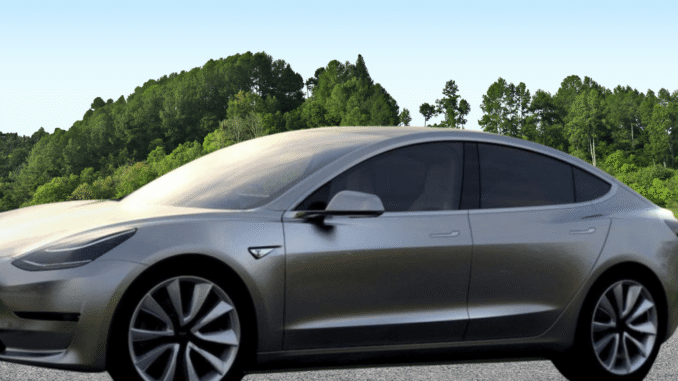
Las electric handles of the cars that look modern and elegantcommon in new models, will be prohibited because they turn out dangerous for the safety of drivers and passengers of vehicles.
Although visually they are attractive and it is common to see them in models of automobiles Tesla, BMW and other brands, electric retractable handles have set off alarms in the automotive industry.
Authorities and manufacturers agree that, under certain conditions, they can represent a risk for people on board a vehicle.
Regulatory changes in the automotive industry
In recent years, the automotive sector has experienced various regulatory adjustments such as the elimination of tax benefits for microhybrid cars in Mexico.
This is a clear example of a trial and error process, where security and functionality end up prevailing over trend.
In this context, a new regulation emerges focused on the handles of automotive doors, particularly those that rely entirely on electrical systems.
China to ban electric door handles in 2027
China will be the first country to implement a measure. Starting January 1, 2027, All new cars must have mechanical handles on all doors, both inside and outside.
In the models that have already been approved, automakers will have until January 1, 2029 to make design changes that comply with regulations.
The measure was proposed and approved by the Ministry of Industry and Information Technology of China.
This decision marks a watershed, especially if one considers that many of the vehicles that popularized this type of handles in Mexico and other markets come from Chinese manufacturers.
READ THIS STORY: This is how the mayor of Tequila, linked to the CJNG, boasted of his closeness to Claudia Sheinbaum
Why are electric car handles dangerous?
The main objective is reinforce vehicle safetypreventing the occupants from being trapped in emergency situations.
The authorities detected that, after shocks or electrical failures, some electric handles of cars They do not allow the doors to be opened.
This increases the risk for drivers, passengers and rescue teams, and has become a concern for buyers of vehicles with this technology.
Therefore, vehicles like the Tesla Model Y and Model 3, the BMW iX3 and others from many Chinese brands have retractable handles that could be subject to the new guidelines.
WE RECOMMEND YOU READ: Replacement in Yucatán 2026 increases in price, you will pay for this
Last year, the U.S. National Highway Traffic Safety Administration opened an investigation into cases in which Tesla’s electronic door handles reportedly did not work.
According to the authorities, the measure aims improve aerodynamics and safetyafter fatal electric vehicle accidents where, according to reports, the electronic doors did not work and the passengers were trapped inside of the vehicle.
Design, aerodynamics and safety
All car doors must include a mechanical opening function for handlesexcept the tailgate, according to the Ministry of Industry and Information Technology.
Being flush with the bodywork, they reduce air resistance, a common practice in disciplines such as Formula 1 and in the development of modern cars.
However, aerodynamics is not exclusively linked to electrical systems. Brands can maintain mechanical handles integrated into the bodywork, maintaining the clean design without compromising safety or depending on electrical power.
Manufacturers’ support
To reach this decision, it was carried out a study in which 40 manufacturers participated of cars, who supported the return to mechanical solutions. The consensus spoke about the simplicity and reliability of traditional systems still being relevant in critical situations.
YOU MAY BE INTERESTED: How to have free internet from the CFE?
A change that will set a trend
With this regulation, China becomes the first country to ban the use of electric handles in autos because they turn out dangerous for users, which could influence future standards at a global level.
The automotive industry thus enters a new stage, where design must be balanced with safety and functionality in daily use.
Chris Liu, a senior analyst at technology research and advisory group Omdia, in Shanghai, said the global impact of Beijing’s new rules could be substantial and that other jurisdictions could follow suit. Manufacturers will have to carry out redesigns or adaptations that could be costly.
“China is the first major automotive market to explicitly ban pop-up and hidden push-operated power handles,” he said. “Although other regions have flagged security concerns, China is the first to formalize it into a national security standard.”
Regulators in Europe and elsewhere are likely to take the measure as a cue or align with China’s approach, Liu noted. The new requirements will have a ma
Leave a Reply