
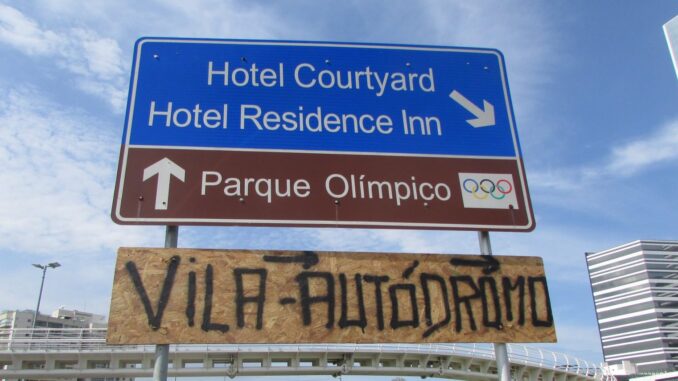

This is the first in our 2026 series reflecting on the city’s favelas 10 years after the Rio de Janeiro 2016 Olympics.
On August 14, 2025 Rio de Janeiro City Council she approved creating a new “southwest zone”who includes 21 districts of planning area 4 (AP4) in a place that traditionally belonged to the city Western zone. The area includes elite neighborhoods built over the last half century, such as Barra da Tijuca, Recreio dos BandeirantesGrumari, Varge Grande and Vargem Pequena. These areas are known for their segregated real estate developments, particularly luxury apartments, which have grown particularly rapidly over the past two decades, prior to 2007. Pan American Games and 2016 Olympic Games.
Two months later, on October 18, 2025, the city council approved the Imagine project, Supplementary Act No. 284/2025which authorizes the city to grant the former Olympic Park – now Olympic Legacy Park– Rock World, the company behind Rock in Rio. According to the council, the plan includes “the creation of a theme park along with a recreational, sports, cultural and commercial complex that is expected to become the largest in Latin America, covering an area of 1,180,000 m². The site will also serve as the permanent home of Rock in Rio, one of the largest music festivals in the world.” The company will have up to 60 months to complete the infrastructure work and then be able to operate the space for 30 years “through the Urban Consortium Operation with the transfer of construction potential to other areas of Barra da Tijuca and Jacarepaguá. Rock World expects to generate more than R$274 billion (~US$50 billion) and 143,000 jobs for the company over the period of 2 to 143,000 jobs. release of the law to submit a detailed spatial plan of the entire area of implementation, which must be approved by the town hall.”
Both laws rekindle debates about territorial planning, real estate speculation, straight to the city and straight to the favela in the region.
In addition, the city recently established its 166th districtnamed “Barra Olímpica” or “Olympic Barra”, having previously been a transitional area comprising several favelas (such as Asa Branca, City of God, Rio das Pedras, Museums, Tijuquinha and Canal to Anil) in JacarepaguaCamorim and Barra da Tijuca and the rebranding of the area, giving it a status associated with “Barra da Tijuca” and the Olympic Games.
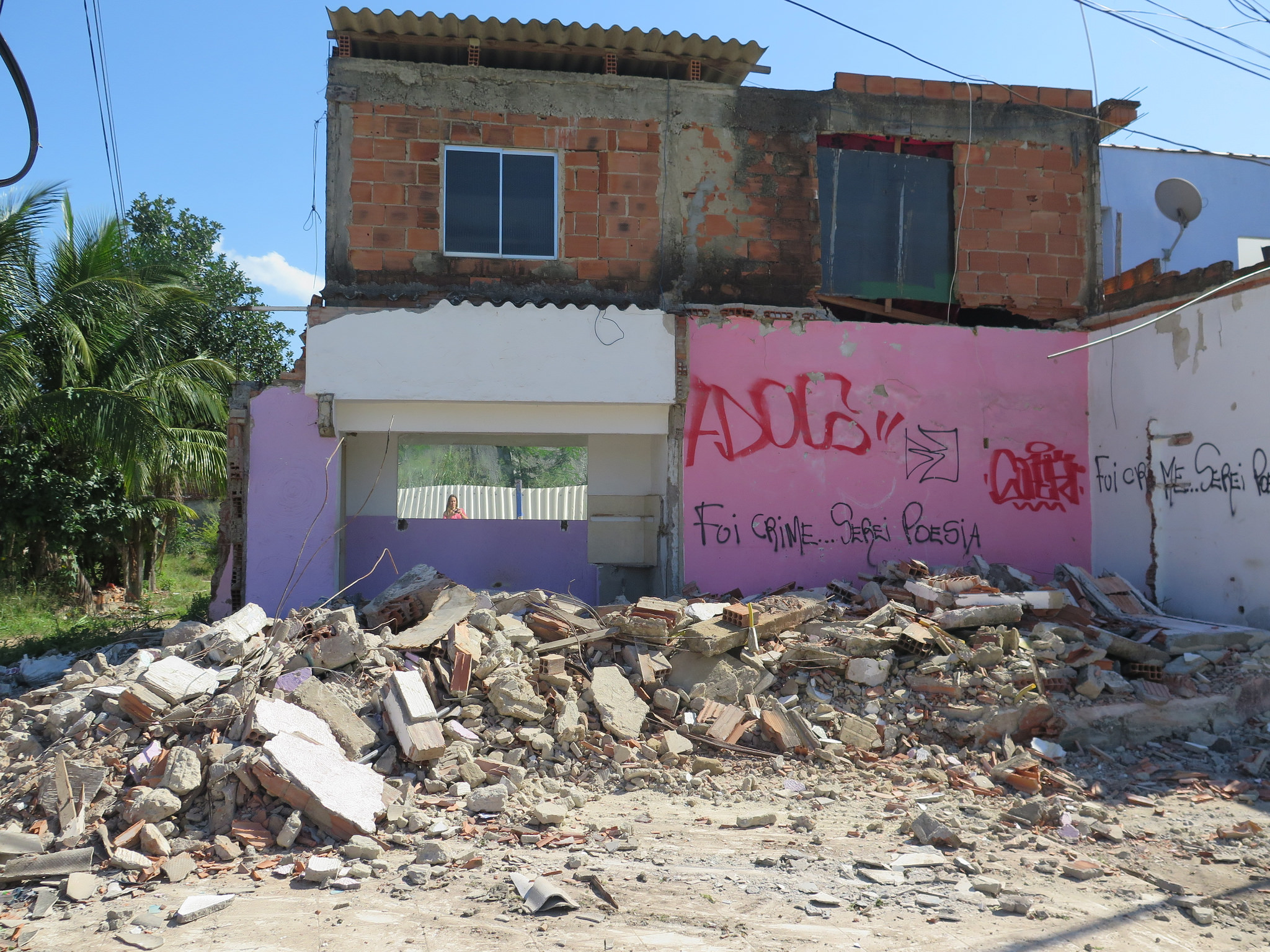
On the outskirts of Barra Olímpica, it still resists, but next to the Olympic Park, 10 years after the Rio Olympics, there is a small community Villa Autodromo. Villa Autodromo became a global symbol in the fight against violent forced evictions thanks to his decades and constant resistancewhich was partially successful despite pushback from powerful stakeholders. When the dust (literally) settled, twenty families could remain in the areathe entire working class. That said, recent developments in the region have reignited residents’ fears jeopardizing their right to staywhether through forced eviction or real estate speculation.
Sandra Maria Teixeira (57) has lived in Vila Autódromo for 32 years. For her, Barra Olímpica was created for very obvious reasons.
“They’re creating this neighborhood, a new one that already brings a legacy with it [affluent] ‘Bar’ [da Tijuca]. It is clearly a project aimed at increasing the value of an area that has already received investment and renovations that clearly serve the interests of real estate speculation… [economic and political interests] they are very clear. One can see the fragmentation of neighborhoods receiving investment [with this new zone]. It is their sequel [speculative] project.” —Sandra Maria Teixeira
One of the concerns that residents are already feeling is the increase in costs related to housing and the right to remain in the region. Teixeira points out: “You have a valuable area with greater public investment, which will justify an increase in the municipal property tax and several other costs.”
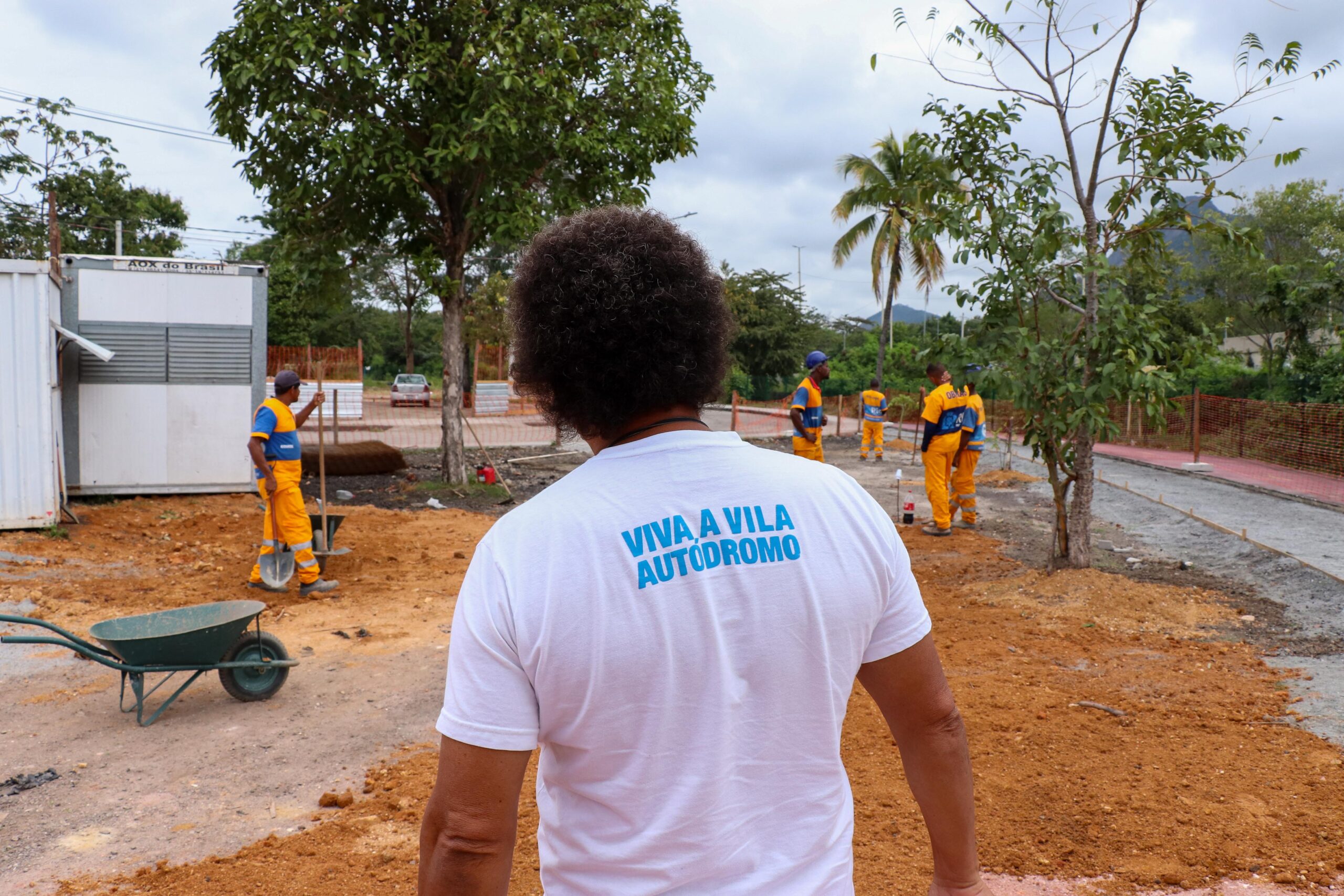
For Luiz Claudio Silva, a 62-year-old physical education instructor, this increase in the cost of living is already in full swing: given the changes being introduced, it is only a matter of time.
“Once it really sinks in, once people realize that the zoning has changed, that the neighborhood is now part of the Southwest Zone … I don’t think so yet, but in the future — maybe very soon — it’s a path to higher taxes.” — Luiz Claudio Silva
With the new symbolic name, residents fear that funding will only go to the wealthiest neighborhoods in the region.
“Our fight has always been against erasure. No benefits have reached us here. When those houses.” [built in Vila Autódromo as compensation before the 2016 Olympics] were handed over on 7/29/2016, it was agreed with the city that they must rebuild everything they destroyed during the eviction… the sports field [for example]all by court order.’ — Luiz Claudio Silva
“We’ve had 58 injunctions issued here. In this case, it was a residents’ association, a community garden, a playground… a sports court,” adds Silva, noting that the city has appealed the rulings, but the courts ordered reconstruction public facilities for community use that have been demolished. However, even with court decisions, the Magistrate the beginning took years works that have always been unofficially monitored by residents.
Teixeira points out that one of the impacts felt in the region – which is also often chosen to host major events and festivals in the city – is the availability of public transport. “We always have to deal with the impact of this. During Rock in Rio we are left without public transport. We have to walk [the condominium] Rio 2, which is quite far. They take the few bus lines [that serve the area]which prevents their passage. They assume it [since] this is a valued area, everyone has a car. Just issue a permit and everything is taken care of,” he criticizes.
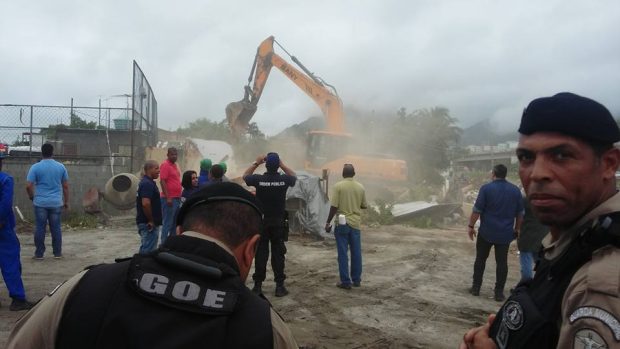
Villa Autódromo also has psychological effects: the new neighborhood bears the name event responsible for subsequent forced eviction from 700 families– neighbors of those who stayed. Their friends were moved to other parts cities or were they were simply left homeless.
“As for our address… it used to be ‘Jacarepagua’. And now you have to say ‘Barra Olímpica’.” — Luiz Claudio Silva
Throughout its history, Vila Autódromo has been subject to several notorious eviction tactics used by City Hall: Trojan horse, canceled services, environmental arguments, disinformation, divide and rule, hidden threats and lost things.
“We are still classified as a special area of social interest. We know that they use a number of strategies when it comes to forced evictions. I’m not sure what the future holds for us.” — Sandra Maria Teixeira
When asked about local participation in decision-making processes, psychologist and Vila Autódromo resident Michael Soares do Nascimento (38) said residents were not consulted on the new town planning.
“Here at Vila Autódromo, we only found out after everything was done. I only found out about it when I read a news article on the internet: ‘Wait, has something changed?’ We have no involvement in politics or access to any information.” — Michael Soares do Nascimento
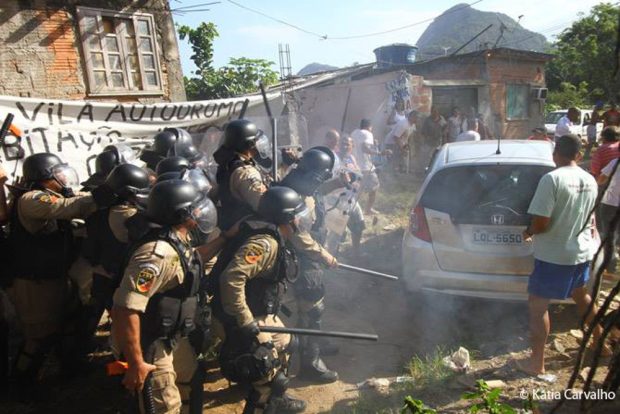
As part of the history of Vila Autodromo, the inhabitants fought against forced evictions carried out by the mayor Eduardo Paes during his first term (2008-2016). His administration was responsible for eliminating dozens of the city’s favelas mega eventalways through non-participatory processes that put real estate interests above the population. This fear – that it could all happen again – persists among favela residents in the new southwest zone, as evidenced by recent eviction attempts Santa Luzia and Villa da Lagoa communities, both now carried out by the town hall under Eduardo Paese in his fourth term (2024-2028).
The future remains uncertain for Vila Autodromo, says the psychologist. What he is sure of, however, is that the government has no public policies aimed at guaranteeing the right to remain – which includes adequate public investment in sustainable modernization – for the favelas of the new southwest zone, such as Vila Autódromo, City of God, Rio das Pedras, Muzema, Tijuquinha and others.
“We have no idea. We’re in the dark. We don’t know what’s going to happen. We hope and pray that things stay peaceful… But… there are no suggestions.” [for policies to guarantee affordable housing in a possible scenario of real estate speculation].” — Michael Soares do Nascimento
To Sandra Teixeira, Museum of Evictions launched months before the 2016 Rio Olympics and maintained by the favela residents, it contributes significantly to the collective memory that sustains the residents’ struggles against removal policies of any kind. But he says he has little optimism for the region’s favelas given the historic moves by the state and the real estate market.
“Here at Vila Autódromo, what we have been doing since 2016 – when around 700 families were forced to leave – has worked through Museum of Evictionsstrengthening the area and local identity. We try to protect our surroundings [from speculation]. As far as public authorities are concerned, it was the government itself that influenced and tore our community apart. What can we expect from them? There are definitely no good expectations – it’s not a good relationship.’ — Sandra Maria Teixeira
About the author: Igor Soares was born and raised in Morro do Borel and studied journalism at the Federal University of Rio de Janeiro (UFRJ). He currently contributes to #Colabora and works as a freelancer. He has experience in topics related to cities, human rights and public security, having previously worked at Estadão, Portal iG and producing news for Folha de São Paulo.
Leave a Reply